Amazing presentation on YouTube and participatory media

I’ll be recommending the following video to my Board in Anchorage soon. Thanks to Robert Paterson for pointing it out. This is pure Internet gold that’s worthy of broadcast on PBS itself.

The point? It explores YouTube (and related sites) from an anthropological standpoint and explains the many ways in which “Web 2.0” technologies are fundamentally different from traditional media. Blew me away with the depth of analysis and the many moments of self-recognition. It’s so reassuring to know there are others out there struggling with issues of authenticity, identity and community in the online world. Old media and new media are even more radically different than I thought.

The only downside: it’s a full 1-hour video. So you have to reserve it for a time when you’ve got that much time to watch it. No snacking here — this is a full meal.

Nonprofits and the Social Web

Thanks to Beth Kanter’s blog for the great little find of a presentation by Steve Bridger.

As we prepare for an overhaul in Anchorage, I find myself thinking more and more about community, “tribes,” interactivity and relationships.

If you’re at a local station, especially in a mid-size to smaller market, this is defintely worth a quick scan.

New KQED.org shames me!

A few years back I had a meeting with our TV manager and our Radio manager and we talked about the web. Specifically, I wanted to develop some kind of taxonomy of topics into which all our content — locally-originated or national — could fit. We could post extras, our local stuff, links to national stuff, all in different topical areas that would be of interest to our audience both broadly and in specific niches.

Of course, we never had the resources to actually develop the taxonomy into something useful online, but the dream was there…

Well, KQED has gone and done it. They blended it into their site redesign, and it looks fabulous. Todd Mundt scooped me earlier this week but I couldn’t let the week pass without throwing in my own congratulations. And, yes… I’m jealous.

But to make myself feel better, I’ll pick one nit: The columns of content in the footer do not line up with the columns of content in the body of the page, indicating that the site is not built on a traditional graphic designer’s grid. So there. 😉

Seriously, though, it’s hard to blend a multiplatform service into a unified web site. I’ve actually done it both ways and it’s harder to do it this way. Lots of competing interests get involved, making a designer’s life tougher. So big congratulations to the KQED web team.

I hope to steal all their ideas before the end of the year.

Stay Current

Everyone in the public media world reads Current, right?
Well, Current isn’t just on paper any more. Be sure to join the fray online at a new Ning site setup by editor Steve Behrens. It’s called, cheekily enough, DirectCurrent.

So far writers from Current and readers are posing questions and sharing ideas both related to recent articles and just out of the blue. Good stuff.

Free account setup required. See you there!

Get Connected

If you’d like a preview of some of the difficulties headed for the public media space, look no further than all the blogging and analysis — and sniping — going on in the newspaper industry. Public media’s problems will be different in style and emphasis, but the core problem is identical.

Be sure to read the latest post by industry veteran and analyst Steve Yelvington.

It’s about connecting with your community in an honest, human way. This is less important for the national outlets, but critical for those in smaller markets where community connection will be critical. Knock over the ivory tower, if you have one…

DTV Conversion: 199 and counting

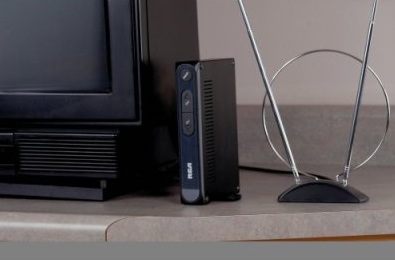
We’re now just 199 days from the end of (the vast majority of) analog TV broadcasts in the United States.

That would be February 17, 2009 for those keeping score.

I’m ready — I’m sitting on cable and I have a DTV antenna outside — it’s just not hooked to the TV yet. How about you?

NPR + PI = ?

I started writing Thursday afternoon about the NPR purchase of Public Interactive, but I figured I’d better stop. I have experience with both entities, I’ve read the press release, but I’m going to give the NPR and PI community 24 hours to express their thoughts first.

Because, at face value and based on the PR piece, I’m baffled as to why this is such great news.

The only way this purchase makes sense is if there’s something new NPR is planning that didn’t get described in the press release.

Please, public media blogosphere and Twitterverse, educate me! Can you complete the equation in this post’s title?

Doug Gordon's Modest Proposal for Public Radio

Don’t bother bringing the forks, knives and napkins, but Doug Gordon has some thoughts to share for the public radio work in the U.S. Delivered via — gasp! — video!

Definitely some interesting thoughts delivered by this Corner Gas extra.  Okay, not really… I mean, they are interesting thoughts, but I don’t think he’s been on Corner Gas. 😉

My favorite suggestion is the last — engaging the public in co-creation of public media. Which is a really scary thought for some pubmedia types I know.

By the way, I stumbled across this video because Doug Gordon posted it himself on the new, and growing, DirectCurrent social networking site put up by Current. Thanks Current!

Welcome KSKA listeners / visitors

I’m dropping in on KSKA Public Radio’s “Community Forum” program this afternoon (live at 2pm Alaska time) to talk blogging. For visitors stopping by — Welcome!

I’ll be posting links mentioned during the live show over at KSKA.ORG.

UPDATE: You can listen to or download the audio from today’s Community Forum program here.