Hey! I resemble this remark…
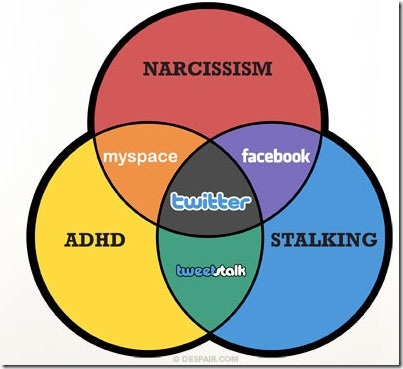
(also available in t-shirt form)
Tech / Media / Strategy / Culture
 Radio and television stations all over the country get nasty, crazy and crazy-nasty callers pretty much every week. Most calls are handled by the poor souls that handle “operator” duties in the station. But after hours, the calls go to voicemail. And back from my days in public broadcasting in Anchorage, I would occasionally save those voicemails.
As I was cleaning up some files this weekend, I ran across these two callers. They never identified themselves (thankfully), but they had some choice words for our station.
October 2008 — What would you do if Big Bird told you to smash up valuable property in your home? You’d do it, right? Well, not if this caller has anything to say about it!
Back in 2008 we were still airing the “Be More” series of PBS self-promotion ads. Apparently there was one in which a musician decides to “be more passionate” following a performance. But in doing so, he’s indoctrinating the children — the children! — in the ways of the vandal.
Call includes the classic “I won’t give you money” threat that always comes from people that never gave you money and never will anyway. [MP3 link]
[audio:https://gravitymedium.com/wp-content/uploads/2010/02/angry25021.jpgaudio/20081013-vandalism.mp3%5DSeptember 2008 — Everyone knows PBS is part of President Obama’s Bolshevik plot, right? Duh! But this caller thought he might turn our local station back to the righteous American way of the world by asking us, in his eloquent way, to remove our collective heads from our asses. Bonus points to this guy for suggesting — way ahead of his teabagging colleagues — that Obama would “kill us” if elected.
What sparked his ire? Well, the Democratic National Convention went on for 4 interminable days in late 2008 with blanket coverage by both our NPR and PBS colleagues each day. But the Republican convention was much shorter — by Republican choice due to the threat of a second Katrina in the opening day or so as hurricane Gustav approached the Gulf coast. Awkward!
But let’s not let facts get in the way of a pre-teabagging rant… [MP3 link]
[audio:https://gravitymedium.com/wp-content/uploads/2010/02/angry25021.jpgaudio/20080901-socialist.mp3%5DThis ad may not make sense to older viewers. But to Generation X and below, I can assure you this is how we live much of our lives today. Every physical phone book I’ve received in the last 5 years has gone straight into the trash or recycling. And if your business isn’t on the web, it doesn’t exist.

The darndest thing happened in the last five days and I was fortunate to be privy to it. Apple has gotten people excited about computing.
But this time, it’s not nerds or geeks and certainly not IT industry analysts. It’s everyone else.
I had a curious set of three conversations this week. One with a grandma, one with a technophobe and the third with a self-proclaimed luddite.
via northtemple.com
Deinitely read this short piece. You already know the people in this post — they’re all around us.
Only time will tell what happens with the iPad, but one thing is for sure: It won’t be another Apple TV. This thing will sell, just not so much to the nerds that are taking potshots at it.
Adam Singer has a nice piece this week on why individuals are far better at social media and building connections than most businesses are today. It feels “obvious” that people can build links faster and better than corporations, but Singer spells out several reasons why companies struggle with adapting to new social media norms, even when they say they want to do it:
It’s messy to build links – you need to get creative, you need to combine multiple skill sets and wear many hats: technical, creative and even relationship building.
It’s messy to build a community – it has strategy and can have some structure, but needs the freedom to think outside the lines and improvise. Most businesses love planning and hate improvisation.
It’s messy to be consistent with updating a blog – be structured and have an editorial calendar all you like, but at the end of the day the individual with passion, motivation and connections can soar above your entire team’s results.
It’s messy to continue a dialogue on Twitter –individuals can link or say anything they want and there are no repercussions. And those people are far more interesting than any brands, or even employees of brands following strict rules.
It’s messy to network – not like an individual has to ask permission to build affinity with social media power users. They just make the connections.
For legacy public broadcasters, I suspect the effective resistance to new interaction models is double the norm, partially because we’ve developed a perfection cult, and partially because of our precarious financial positions make us extraordinarily risk- and change-averse.
…while most people have entered the digital world, participation falls off sharply as complexity increases. For example, 93% of respondents have a digital camera, but less than a third use digital photo-sharing tools. Similarly, 92% of respondents have a cell phone, but only 22% have used an internet-based phone service such as Skype.
The iPad — like the iPhone, like the iMac and all prior Macs — aims for simplicity of use amidst a sea of complex products. It’s what Apple does best and what Microsoft claims it wants to do: give you the power to create and consume media and information with the least effort.
My technically-minded friends are unimpressed with the iPad, and personally I’m a little disappointed at some things that were left out of this first edition (some things seem to have been left out deliberately, like a camera). But the iPad isn’t aimed at us. We can load Linux on commodity PC hardware. We can hack the Windows registry. We manage e-mail servers, not just our own e-mail. It takes a lot to impress or challenge us.
But for the average user — the person that doesn’t care about the difference between a Gigabyte and a Megabit — the iPad fulfills the 93% use case, like a digital camera. It’s a digital lifestyle appliance, simple enough for everyone and powerful enough to be useful in several situations.
I don’t know if it will be an unqualified success, like the iPhone. To me, the iPad is an evolutionary product rather than a revolutionary one. The iPhone revolutionized the smart phone market because it was the first to get it “right” for a broad swath of consumers. Uptake was instant, even when it was just a 2G model with no apps and no cut-and-paste.
iPad uptake will be far slower. But each revision will be better and better and the price will moderate over time. As people are disappointed by netbooks and find they want to consume a variety of media on the go with the least hassle, and with familiarity from the iPod Touch and iPhone, it’s got a serious shot at creating this new category.
Apple endured its darkest days during the early 1990s, when the PC had lost its original magic and turned into a drab, utilitarian tool. Buyers flocked to Dell’s cheap, beige boxes. Computing back then was all about the programs. Now, computing is all about the programming – the words and sounds and pictures and conversations that pour out of the Internet’s cloud and onto our screens.
via roughtype.com
I’m not so convinced — yet — that the iPad is the answer to a bunch of different needs. It’s clearly a 1.0 product and it feels like Apple has withheld some key technologies and features for the next revision.
But if Apple delivers on a few more functions — video conferencing, textbooks and a sort of cloud-based “docking” and sync — then the fate of the PC is fairly well sealed, at least for personal use.
PBS, NETA, APTS and CPB leaders are out of their freaking minds if they think Mobile DTV will take off. All momentum is in the opposite direction. All of it. But go ahead — read the giddy predictions:
Public TV leaders at NETA predicted Mobile DTV will be used for simulcasts of live TV as well as weather alerts, datacasts of traffic maps and sports scores, radio with pictures and interactive brainstorms yet to come, CPB is backing a PBS experiment with a 24-hour children’s TV service.
Though commercial broadcasters are mum about their business plans, said CPB Senior Vice President Mark Erstling, they agree that kidvid is Mobile DTV’s “killer app.”
There’s even hope that Mobile DTV will seduce 18-to-24-year-old “millenials” to watch news and public affairs TV, said Lonna Thompson, general counsel of the Association of Public Television Stations, speaking at the NETA Conference. A survey indicated their level of interest would double, she said, because they’d no longer be “tethered” to a set in the living room.
Mobile DTV may be able to do a tolerable imitation of cable: Planners say broadcasters in D.C. will air at least 20 different Mobile channels during the tryout this spring.
It can also do a limited imitation of video-on-demand by “clipcasting”—constantly downloading, in advance, an array of popular videos to be stored in users’ receivers—though it won’t let users choose among every video on the Web.
Where it may shine is fulfilling past visions of interactive TV that cable has failed to realize. If the mobile receiver is a cell phone, it can provide a return path for ordering pizzas, voting on American Idol or whatever users want to click
“There will be great businesses built in Mobile DTV,” predicted Andy Russell, senior v.p, PBS Ventures, at the NETA Conference. “We think the possibilities are enormous with this new platform.”
via current.org
QUESTIONS
There was a time, many years ago, when a kid — like myself — enjoyed smuggling a little 2.5 inch Casio TV into my high school study hall and getting fuzzy TV images of “The Price is Right” or daytime soaps or whatever was on. But aside from that experience I’ve never wanted mobile TV. Mobile video, yes (and I have that), but not TV.
Keep in mind that TV, including some of public TV, has turned into a broadcast wasteland, especially during the day when people are mobile. I’m going to tune in for “Judge Judy” for 1.5 minutes while I’m on line at the bank? Not likely.
The only shot Mobile DTV has is kids programming, and only from PBS. But is it a “killer app?” Well… if you define “killer” as the only remotely viable app for Mobile TV, done at cost in a noncommercial model, then sure. And Lord help us all pay for all the infrastructure this year and forevermore.
To understand why Mobile DTV won’t make it, just look at what kids are already doing today: they’re texting and using social networks and calling one another. They’re doing social things, not kicking back and watching TV. At most, they might refer friends to see a web video clip, but that will be something forbidden, not a great vocabulary lesson from “Word Girl.”
As 3G and 4G wireless networks (and WiFi) become truly ubiquitous, and our devices are always on the ‘net, TV will become increasingly quaint. The only likely users for Mobile DTV will be the very Boomers that won’t buy the Mobile DTV devices anyway.
And let’s not forget all the bold promises of DTV that remain unfulfilled, which we’re hearing yet again from our august leaders: datacasting, weather, sports scores, news, ad nauseum. The fact that “radio with pictures” was noted in the article tells you how desperate these folks are to get attention. And hey — where’s my MP4-encoded DTV broadcasts? When’s that gonna be done?
Finally, don’t get me started on the low technical quality of the proposed Mobile DTV channels. I have a 2-year-old Flip cam that shoots better video than could be displayed on Mobile DTV. How does this make sense? Disruptive technologies can indeed come along with a lower technical quality, but who intentionally builds a Ferrari and then dents it up, puts a speed governor on it and smashes the windshield to get different customers interested?
Today — the “day of the Tablet” — I encourage all the public broadcasters out there with an eye toward Mobile DTV to look at the real future: mobile apps, mobile web, mobile multifunction devices field-upgraded on demand with new software from the cloud. The web absorbs and carries all media, synchronously and asynchronously. Reverting to broadcast just doesn’t make sense in most cases, and where it does make sense, we already have technologies and deployed assets that work fine; they even work better than fine if you consider HDTV.
Mobile data is much more valuable to our society and economy than propping up a shrinking business model. Let’s stop fighting the losing DTV battle and start fighting for a public service media future that meets the needs of our community and meets people where they are and where they’re going, not where they’ve been.
When the White House announced that President Obama would deliver his State of the Union message on Jan. 27—the same day Apple was planning to unveil its new tablet computer—many of us at Slate cringed. “What is Obama thinking?” one of my colleagues joked. “He’s going to be totally overshadowed.”
The idea of a product rollout trumping the president’s annual speech to Congress does seem funny. Maybe the tablet will be a bust. Maybe Obama will rock the world. But the opposite is at least as likely. This isn’t Obama’s fault. It’s just the way the world is going: Technology, as a driver of social change, is overtaking politics.
via slate.com
Sometimes it’s hard to take a wide angle view of what’s happening in our society, whether within our national borders or planet-wide. This piece by Slate’s William Saletan explores just how pervasive and entwined our First World society is with technology. It’s changing how we act, how we think and, of course, how we communicate and share ideas.
And for me, the Apple tablet introduction totally overshadows the pronouncements of our President.
Apple’s tablet will actually change the world, one way or another. Our President, a year into his floundering administration? Not likely to change much.
 Gravity Medium