Leaving KETC: It Was Just One of Those Things

Newsflash: I’m no longer working for KETC in St. Louis.

Following a quick 8 weeks in the shadow of the Gateway Arch, I’m left humming one of Ella Fitzgerald’s signature Cole Porter songs:

http://www.youtube.com/v/MoiLkCojxAM&hl=en_US&fs=1&rel=0

And with Ella reverberating through my head, allow me to share a bit of the story.

By the way, for anyone seeking dirty laundry: I’m going to disappoint you. But I will unpack what I’ve learned and perhaps that can help you in your career. Because I’ve got new insights into job situations I’d heard about, but hadn’t personally experienced until now.
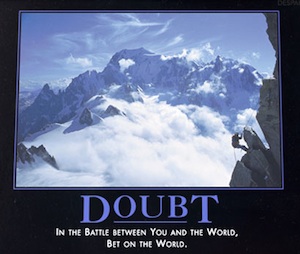
Doubts

The trouble started in January.

I participated in a weekend project kick-off for KETC’s new immigration-focused public service media engagement, a follow-up to the successful Facing the Mortgage Crisis. I flew down from Anchorage to partially advise and pseudo-interview for an online media role in the project.

Sounded great. But from the get-go I had several intuitions things weren’t quite right, at least for me. And I promptly ignored every sign, assuming I was being excessively cautious or pessimistic or silly or… something.

Some of the early signs I ignored:

  • I was never excited by the project’s topic: immigration. Yes, immigration is a major national topic these days and it has interesting dimensions, but it’s not something that ignites a passion for me. I figured that didn’t matter because I was interested in the work, the methods, the tools and approaches, if not the topic itself.
  • Pure-play public TV stations make me nervous — I’m not a fan of the current programming or fundraising models (declining cultural relevance and revenue), yet that was the core nature of the host station. I figured this, too, didn’t matter because the project was something very new and it was isolated from the TV business.
  • I’m a huge fan of news as a public service, yet most public TV stations, including KETC, have no local news capacity. In this case I consoled myself with the knowledge that the St. Louis Beacon lived within the walls of the station, despite:
    • being a separate nonprofit;
    • having a written-word focus rather than video focus; and
    • having little to do with the project.
  • The project had funding only for 1 year. This created two concerns:
    • I’d likely lose my job in a year (though I was willing to absorb that risk for the opportunity).
    • I struggled with the conflicting ideas of building long-term community engagement online when the project has a definite end in the near future (i.e. please join us online, see ya later).

Any one of these doubts was minor and I easily rationalized them away. But I failed to see them as a whole. And the pattern of doubts continued.

I won’t go into every issue, because it doesn’t really matter now. But there were niggling concerns that popped up all along the way. Conversations ahead of my arrival felt either rushed or delayed. Project goals remained nebulous (which I thought was a good thing for a while). I felt “wanted” for the project, which was great, but then my concerns about fulfilling the outsize expectations grew.

On the Ground

Once I arrived the first week of March, I started to get settled, but never felt at home, either at the office or in my apartment after-hours. The team’s space wasn’t done. I was using my own computer at the office and had WiFi problems. I had a noisy upstairs neighbor at home. I was working on team collaboration stuff rather than public-facing web stuff (which turned out to be a big mistake). The project goals were still being defined. My wife and I were adjusting to the separation. I spent too much time making social media contacts in the area, looking too far down the road. I learned there were factions within the company that resented my hiring. Nothing felt grounded for me.

There was even personal stuff getting in the way. It began with the drive down from Alaska — my driving companion effectively started divorce proceedings via text messages, emails and phone calls in the car. That was odd. But I also took time to attend my mother-in-law’s funeral in April, while seeing my wife for the first time in 6 weeks. Then I fell ill while visiting CPB and was effectively out of commission for a week with strep throat — the first time since I was a kid.

All in all, from March 4 to May 6 I never felt safe, whether at home or the office. And let’s be clear — I’m just recounting my perceptions. I never felt anyone was “out to get me” or felt unwelcome. Indeed, my coworkers were delightful people and were sympathetic to the challenges I was facing.

Communication, Priorities, Goals

Meanwhile, in the project work, there were things that needed to be done. Quickly. Yet my communication with my supervisor seemed to skip a beat each time we talked. I’ve never had that experience before. Looking back now, I would call it what I’ve heard others say about other jobs and people: “it wasn’t a good fit.” I never really believed in that notion until the last couple of weeks. But it’s real, and it was disorienting. Whatever the reason — or maybe no reason at all — we talked past each other when it came to priorities or speed or goals, or maybe I simply wasn’t listening.

As I told my boss just last week: I’m not used to failing at things, I’m used to succeeding. My typical approach is to take on something new and delight people with better-than-expected results. But that didn’t happen this time. I felt horrible about it, which only compounded the situation.

At the end of the day, I was deeply unhappy with the job. And they were deeply unhappy with me. Sadly, I was starting to see ways forward in the final week-and-a-half. But it was too late to recover — the ship had taken on too much water.

Lessons Learned

As I shared a brief version of my story with a friend late last week he said, “When you get older, you’ll learn to listen to those voices in your head that warn you there’s something amiss.” Well, I’m older now. About 8 weeks older on the calendar, but a few years older in experience.

What have I learned that you might be able to use?

  • If you have doubts, don’t minimize them. Logically evaluate them as best you can, but keep in mind some doubts are not logical on the surface, relying instead upon subconscious cues linked to your values, perspectives and experience.
  • When you wager your career on a risky opportunity, you can, in fact, lose the game. Good intentions, though important, aren’t enough.
  • Know what levels of risk you can live with comfortably. If you stress yourself out over the risks you’ve taken, the situation actually gets riskier.
  • You cannot think creatively if you don’t feel “safe” in your life. Get to know what it is that makes you feel “at home” and get those things in order first.
  • Find out what is driving your boss and CEO forward. “Driven” people upstream from you can be a boon to your career if you share a common vision and communication style. Or they can be dangerous. Ignore their motivations at your peril.
  • Yes, there is such a thing as a “bad fit” in the working world, even between hard-working and otherwise successful, well-meaning people. Bad fits make everyone unhappy, and it’s better to figure that out and make changes quickly than to drag it out indefinitely.
  • It’s up to you to get specifics on desired work outcomes up front. Know how fast an employer wants things done, and to what level of perfection. Know how you will be evaluated. If you can’t figure these things out, skip the opportunity.
  • Never let anyone hire you if they think you walk on water. Because you don’t. And when you don’t walk on water, you’ll feel bad about it and they’ll be disappointed. Everyone loses.

What’s Next?

The first question I’ve gotten from close colleagues is, “Will you stay in public media?” The most honest answer: I don’t know. With dwindling budgets, drifting missions and more than a smidgen of drama here and there, it’s certainly an open question. I maintain my passion for public service media — there’s a need out there and a tremendous opportunity to serve community needs in new ways — but I may be able to serve in ways beyond employment.

For now, I’m focusing on opportunities in the Information Technology (IT) field, whether in nonprofits, healthcare or other businesses. I’ll remain open to public media options, but I have a much longer history in working with IT infrastructure projects and services (networks, servers, security, desktops, telephony, etc.). Not to mention I enjoy the work.

As for location, I’m in St. Louis at the moment, and I’m looking for work here, but I’m also looking at cities all over the place, including back in Anchorage, where my wife is still living and working. Other potential cities include (in no particular order):

  • WEST: Spokane, Boise, Denver
  • SOUTH: Austin
  • MIDWEST: Columbus (OH), Kansas City, Indianapolis, Minneapolis/St. Paul, Madison, Des Moines, Louisville
  • EAST: Asheville and Raleigh, NC

Just One of Those Things

As I look back over the past 8 weeks I’m realizing just how fast everything happened and I’m amazed. I’ve never moved from new hire to former employee in 2 months before. I’m disappointed with the way things turned out, but I’m also deeply relieved that the stress is over and everyone can move forward.

Plus, Cole Porter’s lyrics have a new meaning for me:

If we thought a bit of the end of it
When we started painting the town
We’d have been aware that our love affair was
too hot not to cool down

So goodbye dear and Amen
Here’s hoping we meet now and then
It was great fun
But it was just one of those things

I wish the team at KETC the best. They’ve got a great project on their hands, they’re good people and I’m sure they’ll pull it off.

Farewell Alaska. Hello St. Louis!

Announcement Time!

As of this week I accepted an exciting new position with public service media company KETC in St. Louis, Missouri. Starting in early March, I’ll be their new Director of Digital Engagement.

Historically KETC has been, and to this day is, a public television station in a TV market of roughly 3 million, broadcasting national PBS programming as well as locally-generated shows, some of which are distributed nationally on occasion. Amongst public TV stations, KETC is one of the oldest on record. Seriously — check out their amazing timeline going back to 1954, a full 13 years before the Public Broadcasting Act. Now that is history.

Yet for all that rich history, KETC is becoming something very new today: a public service media company, not simply a broadcaster. Over the past few years they’ve embarked on a remarkable transformation, developing closer relationships with their community and using media to solve problems.

It started with outreach around The War, in which KETC set the national standard for gathering local veteran stories and integrating it with the Ken Burns documentary.

This new way of working and thinking culminated with the local, then national, Facing the Mortgage Crisis, in which the station literally networked nonprofits, government agencies, banks and homeowners in a united effort to slow or even stop the wave of foreclosures hitting the area following the financial meltdown. The project included social media, broadcast, old-fashioned networking, live events and lots of online work. The accomplishment in St. Louis were so impressive the CPB expanded the program to selected stations nationwide.

Now a new project is beginning; one focused on issues around the topic of immigration. They’re even remodeling part of the building to house the new local nonprofit news service — the St. Louis Beacon — and the cross-functional multiplatform digital media team… all together in the same space. And I’ll be there to help.

I can’t tell you how exciting this is. I’ve watched KETC from afar, oftentimes through consultant Rob Paterson‘s postings. This is an opportunity for me to put up or shut up on digital engagement and public service media. And I will do my best, for the good of St. Louis (a town I knew as a child, as it turns out), and hopefully for a broader public broadcasting community looking to understand how to move into what CPB’s Rob Bole calls “public purpose media.”

Sadly, this means I will be leaving Alaska very soon indeed, having lived on the Last Frontier for the past 9 years. The departure is made all the harder because I must leave behind a vibrant social media community I helped create over the past year. That community has gone on to raise money for a friend in need, form a local Ignite chapter and, from what I’m told, a wedding may be in the works. 🙂

So farewell Alaska. I will miss your Chugach mountain skyline and the warm embrace of entertaining and thoughtful friends all too soon.

And hello St. Louis! Let’s make something meaningful together.

Changing the rules of the game

I was catching up on some reading over the Christmas weekend and came across a fascinating post over at Reflections of a Newsosaur about Panorama — a fascinating project from McSweeney’s that puts a ton of new journalism out into the world… in print.

But what was just as interesting as the project was the reaction on the blog. Immediately the news pros out there ragged on the effort as “just a magazine” and derided the project’s ability to produce so much (admittedly great) content on a daily basis. Harumph! they cried out.

But thankfully one commenter had the right idea — who says all “real” news has to be daily? Who wrote these rules, and what if they don’t apply anymore, or shouldn’t apply?

Indeed.

If you goal is to change the world (for the better), then you have to… well… change the world. That means some things in your world will change.

Even amidst all the change in the media world, newspaper leaders and supporters would rather dump on an innovative new project on not meeting their imaginary “standards” than consider how they might change to do insanely great journalism. We don’t need daily print publications, we need engaging stories and information that help us solve problems in our lives and communities. Maybe you do that every day, maybe every other day, maybe weekly, monthly — whatever is the right process to fit your economic and storytelling capacity.

The worst thing we can do, if we want to make impacts as public service media companies, is to keep doing what public broadcasters have always done, without modification, without experimentation, without considering the needs of the community today, not the community’s needs from 1979.

Additional links from WOSU presentation

In prepping my presentation for WOSU Public Media last week, I spent a lot of time reviewing other people’s recent presentations, stories, blogs, data and so on. Really, I read stuff every day related to digital media, so tracking it all back down is kind of hard. But I wanted to make sure I gathered a list of links and other resources folks could review if they wanted to dig deeper than my presentation alone allowed. So here they are, in no particular order…

From Broadcast to Broadband: Redesigning public media for the 21st Century
Discusses how public media must change to meet the challenges of a 21st century media universe. Jake Shapiro, PRX and Ellen Goodman, Rutgers; presented at Harvard’s Berkman Center for Internet & Society. Note: The pie chart showing CPB expenditures is incorrect. There’s an extra $71M included in the TV programming slice that shouldn’t be there.

The Future of News
This was a conference held at MPR in St. Paul, MN in November 2009 bringing together journalism leaders and pundits from public and commercial media in all formats. Lots of video and other resources. Props to Julia Shrenkler for tons of work on this one.

The Good, the Bad and the Ugly
Michael Rosenblum offers a critique of the folks that appeared at The Future of News, as linked above.

A Collection of Social Network Stats for 2009 (Jeremiah Owyang)
A frequently-updated list of social media statistics, including links, for all the major services.

The Chaos Scenario (video)
The Chaos Scenario (blog / book)
Bob Garfield, co-host of NPR’s “On the Media,” has written a book and built a wide-ranging presentation on how current media companies are faced with a chaotic world that’s changing the fundamental models of media economics. It’s a long video, but a good one.

Continue reading “Additional links from WOSU presentation”

Changing tires on the public media bus at 60mph

Pop quiz, hotshot. There’s a bomb on a bus. Once the bus goes 50 miles an hour, the bomb is armed. If it drops below 50, it blows up. What do you do? What do you do?

One of my favorite writers on matters of strategy, especially related to technology application in business, is Bob Lewis, a long-time columnist from InfoWorld and a popular business consultant as well. He writes a weekly column, shared via the web. Great stuff.

This week he wrote a piece (the second in a series) on business strategy: “A business change cornucopicolumn.” And it sounds like he’s talking about my specific public media company in Anchorage and the public media industry in general.

It’s spooky.

Check out this rather heavy quotation (sorry, I just had to) and see if it fits your strategic situation (added boldface is mine):

[Let’s] start with a framework for describing any business. It has ten dimensions — five external, five internal.

The external dimensions are:

  • Customers: The people who make buying decisions about what the company has to sell.
  • Product: What the company sells its customers.
  • Price: What the company charges for its products, along with margin goals, contract terms and conditions and so on.
  • Marketplace: The business ecosystem — suppliers, distribution channel, competitors and partners.
  • Messages: How the business explains itself and its products.

The internal dimensions are:

  • People: Employees and contractors — the human [beings] themselves, their skills, knowledge and experience.
  • Process: How people do the company’s work.
  • Technology: The tools people use when fulfilling their roles in the company’s processes.
  • Structure: How the company is organized — its reporting structure, [salary] structure, policies and guidelines, and internal communications.
  • Culture: How employees respond to common situations.

In healthy organizations, the ten dimensions are consistent, interconnected, and mutually reinforcing.

Companies don’t undertake strategic change just because one or two are a bit moldy. They undertake it … because the company’s business model no longer works. Perhaps the company’s products are no longer relevant, or the customer segment it serves is shrinking, or its pricing is no longer competitive in its marketplace, or its marketplace has changed in some serious way. It’s fallen behind.

Many companies enter a sort of vegetative state in which doing nothing at all becomes the strategy — they pare spending down beyond the minimum, hoping someone buys them before they’re completely [beat]. The alternative, though, is nearly as bad, because there is no such thing as changing just one of the ten dimensions of organizational design.

[For example:] Your competitive challenge is pricing. But you can’t change just the price. You need a [better] response than that, because … you’ll lose money on every transaction.

To cut prices while preserving margins you’ll need to change your processes. That means “changing” your people in some way too, because new processes wholly or partially invalidate old skills.

Most likely, you’ll have to change structure and culture as well, and reposition yourself in the marketplace (including, perhaps, bypassing your current distribution channel). All of which will require significant changes in technology.

That’s a lot to change all at once. You have to take an interconnected ten-dimensional model of the business that worked and redesign it into a new interconnected ten-dimensional model of the business that works.

Then you bet the farm, implementing the new organizational design as one massive process. And you don’t get to stop running your business during the change-over.

…[The] company’s executive team decides the basic shape of pricing goals, production strategy (process), and distribution. It also decides on any structural changes that will be required, putting the right people in charge of critical business responsibilities.

And, it will define the underlying cultural changes necessary for everything else to work.

The executive team will focus its attention on the cultural change. The rest of the company will use the 3-1-3-4 formula (3-year vision / 1-year strategy / 3-month goals / 1-week plan) to figure out everything else and make it happen in manageable increments.

Holy shmoly!

I don’t know about your company, but that fits my company, right this second, perfectly.

We’re grappling with these problems all at once:

  • Public TV’s audience is dwindling nationally and locally. That reduces advertising (sponsorship!) revenue potential and revenue actuals.
  • TV membership dollars are steady, but from a shrinking number of donors (per donor giving is up, total donor count is falling).
  • The cost of producing national-quality mass-media-style pubTV programming has risen beyond our ability to do it locally and it’s quickly becoming too expensive to buy it in national packs from PBS.
  • The cost of producing lower-end media has collapsed, allowing a flood of programming at the bottom-end of the market, and allowing the “audience” to produce (and consume) their own digital media, without paid gatekeepers like us.
  • Our TV fundraising model is based upon transactions with people that don’t usually like us or give us money — we sell them stuff. In so doing, we’ve painted ourselves into a corner: true believers hate us when we grab the money and cut off their favorite programs, yet we need that cash to pay for the true believer programs. When we attempt to raise money around regular programs, they tank, financially.
  • Our public radio audience has grown over the past 15 years, but has now flattened and may be starting a long backward slide if we can’t figure out how to grow our audience further or deepen our relationship with the audience we’ve got.
  • Our staff is composed almost exclusively of baby boomers and others that built and/or grew up with the public media system. They are approaching retirement and don’t seem to have another “revolution” in them. Internet models are curious, but unproven, for them, and since they largely eschew new media consumption models, they don’t know how to approach them from a business angle.
  • Government funding for public media in our state has fallen over the past 15 years. Using inflation-adjusted dollars, funding has dropped by more than 50% in 10 years. Plus, companies successful with fundraising activities are deliberately cut off from state funding. And federal funding has been flat or declining (in inflation-adjusted dollars).
  • Our strategic drift has led to an accumulation of drifting employees and a loss of innovating ones. If you’re a striver, a pusher, a mover-and-shaker, if you want to accomplish something, we offer a frustrating environment at best. Our culture says we should wait for a knight in shining armor to come along with bags of money a new and exciting crusade to save us.
  • Our product set, as currently deployed, does not compete well enough in a mass market well enough to draw the required revenue, and it doesn’t serve a niche market well enough to garner a rabid following of local support. In web terms, we’re too small to be Google, but too big to be 37signals. (What’s the opposite of a sweet spot?)

I could go on.

Our CEO has repeatedly likened our strategic situation to changing the tires on a bus while driving down the highway at 60 miles per hour. That feels about right.

Personally, I’d like to pull over, get this bus up on a lift and change the tires in a more controlled environment. Then we can get back on the road. But as soon as we drop below 50mph — KABOOM! …the bus explodes, and that’s it for Keanu Reeves and Sandra Bullock.

Which is why Bob Lewis’ 3-1-3-4 formula may be required for us on the mobile pit crew. And it’s why strategies built around a new understanding of the 10 dimensions of business are in order. Clearly, more than 1 or 2 of the 10 dimension have changed:

  • Our customers are moving online and expect on-demand access in addition to the streamed services. They also want to interact with us. (Ironically, in a hyper-connected world, they’re more “disconnected” than ever — they need more connection with people like us, people like themselves, people in their neighborhoods.)
  • Our marketplace has changed; it’s no longer “3 networks + PBS” and hasn’t been for years. And it’s getting worse as new platforms appear and the audience fractures.
  • Pricing models have evolved dramatically as the scarcity economic model dissipates in media markets.
  • Our people and processes were selected for legacy customers and markets, not the present day; they need to be retrained technologically and culturally or be replaced.
  • Our legacy technology is prohibitively expensive to maintain, doesn’t offer sufficient economic advantage and prevents investment in new technology that would enable new processes and services.
  • Our business structures and company cultures are unfocused at best and self-destructive at worst. We focus on “radio” and “TV” and “web” and we promote history over innovation. We need a culture that encourages and develops the best of what our public media “tribe” seeks to experience.

Can we still turn it around? I don’t know. Perhaps in smaller companies with a few lucky lightning strikes of vision and a philanthropic community that supports a positive vision of the future (a vision we must articulate). Or maybe in the largest companies with deeper pockets and tighter links to market forces.

We’re at the cusp of turning it around in Anchorage. Or at least I think so — I hope so. There’s still a great deal of fearless, tireless and perhaps even foolhardy leadership required. We might just have the kernel of what it takes. I think the rest of 2008 will likely set us up for ultimate success or failure. We’ll either get this right quickly or it will likely be too late to recover.

How are you doing with your public media bus?