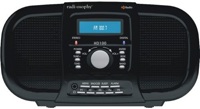
 Okay, catchy headline, but I’m not actually that “down” on HD Radio per se. But I am against getting excited about it, for all kinds of strategic reasons. A new post by Mark Ramsey has a great kicker paragraph that sums up the state of affairs:
Finally, HD is certainly an “upgrade” from the perspective of the broadcaster and the engineer. But is it an “upgrade” from the perspective of the consumer, who already has more choices than they know what to do with — even if they’re not choices which are not under the control of the radio industry? After all, when the Internet is in my car, isn’t HD Radio actually a downgrade?
This reminded me of a recent instance in which I was on the receiving end of a talk from a broadcast engineer about HD Radio. Not an informative one, but, well… a lecturing one.
The lecture? Basically: “Hey, we’ve got this HD Radio stuff installed. When are we going to start broadcasting additional channels? Because, you know, the FCC grants us a license for community service, so we have an obligation to start using HD Radio to serve the community.”
I was floored.
First, the logic was so brazenly absent from this argument. Second, why is engineering directing public service strategy? Third, we are using the HD Radio gear, even if we aren’t multicasting. And finally, well… let’s list all the obvious market reasons that make multicasting a less-than-critical strategic focus:
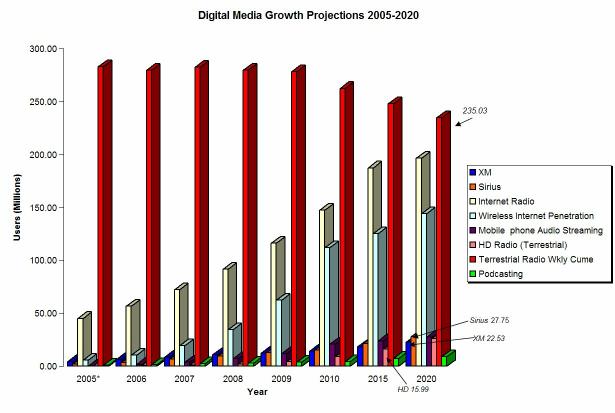
- virtually no one has HD devices and sales are not increasingly rapidly
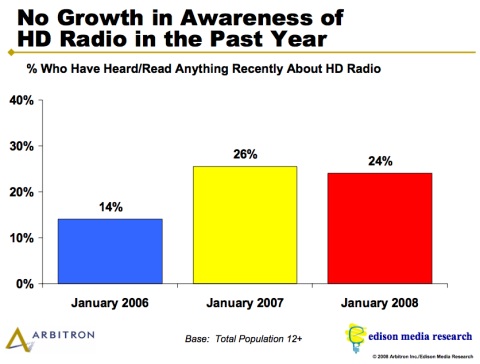
- most consumers don’t know about it
- those that do know about it are not really interested
- HD devices are too expensive for most listeners for casual situations
- additional HD channel development requires additional effort (money), even in a heavily automated approach
…and so on, which makes developing additional HD Radio channels at this time an exercise in wasted money and effort for a regularly-strapped public radio provider. We’d be better off focusing on improving our existing services or forging ahead in new media / social media.
Let’s be clear: the HD Radio technology platform is not the mission of public service media (nor is FM radio or AM radio or analog TV or digital TV or web sites or DVDs or CDs or…). HD Radio is a tool. It’s up to us to figure out when and how it makes sense to employ this tool in fulfilling our public service mission.
And if, down the road, we find that HD Radio was a waste of money, we should have the courage to scrap it and move on.
 Gravity Medium