When a public radio lover turns hater

While searching for more NPR / Ken Stern articles today, I stumbled across a blog post that refers to the news, but spends much more time listing the crimes and misdemeanors of the current public radio landscape, especially as emanating from NPR and other national outlets (APM, PRI, etc.).

Written by Dave Slusher, Public Radio Fails Me explores at length the ways in which Slusher was first captured by public broadcasting and especially public radio many years ago. But it goes on to lambaste public radio for what he feels its become — populist when it comes to cash, elitist when it comes to control, and tired when it comes to programming.

Written by any person on the street, it’s a damning indictment of some of public radio’s (perceived) trends over the past 10 years or so. But this was not written by any random man on the street — it’s written by a man with experience inside the system as a producer as well as consumer.

While I’m not entirely in agreement with Slusher, I do think there are some truths in there with which public radio (and all of public media) must seriously grapple. Slusher’s comments on the changes in the flagship NPR newsmagazines in particular I find fairly accurate. Of course, those changes may account for the doubling in NPR’s weekly audience over the past 10 years. But it’s definitely changed, and for those with an interest in deeper news coverage, it’s not all positive changes.

In any case, it’s a long post but worth a read and a comment at his site, whatever your opinions.

How 1998 isn't like 2008

I’m a week late blogging it, but I wanted to make sure I highlighted the interview with Clay Shirky on WNYC’s On the Media right at the end of February. Plus I wanted to plug his book, which I’m ordering right now.
One of the points made in the interview is that just 10 years separates this new mode of Internet activism and participation from the old model that didn’t allow people to easily find one another and co-create social action and original media around shared values and interests.

In a world like this — where the audience (or community) is in control as much as the old gatekeepers (perhaps in even more control) — what is the role for public service media?

Paterson on leadership (at NPR)

While I do appreciate Robert Paterson’s take on the leadership issue that’s likely below the surface of the NPR / Stern debate, I’m struggling to believe that that’s the core of this week’s story — that Ken Stern just ruffled too many feathers and it was time for a different leader. Sure, hard-charging generals are not the best leaders in all situations, and after 10 years of whip-cracking you might need a smooth operator. That makes eminent sense.

But in the shifting media environment about which so many of us write and ruminate, isn’t a hard-charging general needed at the top? Someone that has both the vision and the drive to push through to a new way of thinking and doing. The media environment changes in play today are not just operational in nature, where a COO might fix this, improve that — they’re strategic shifts. Seismic shifts. World-upside-down shifts. Only a CEO and her or his board of directors can handle those issues and realign the company. And given the time-to-market pressures of new media on old media, NPR probably didn’t (and doesn’t) have the time for all the required dinners and socials and private meetings, nor could it afford compromise after political compromise on the way to a new strategy.

NPR — like all media companies, for-profit or nonprofit, operating in any or all media formats — must grapple with the fundamental changes in progress. The relationship between producers, distributors and consumers is completely inverting.

Of course, this entire discussion could be moot. Public media’s future may have to be created outside the voluminous corpus of NPR (or APM or PRI or APT or PBS or …). Developing a new model with fundamentally different DNA may not be possible inside the system, either with a hard-charging general or a sweet-talking politician.

Jarvis on NPR

Well he’s not “on” NPR, but he comments on the NPR / Ken Stern thing, as you might expect. He even gives a shout-out to yours truly (blush!). I returned the favor by commenting on his post.

  • Trouble for NPR — BuzzMachine / 7 Mar 2008 (Update: Note Dennis Haarsager’s comment to this post at Jarvis’ blog)

In that post he also refers to a great year-old post about public radio, following a meeting he had at NPR along with other new media folks. This is the post that introduces the great new word “converstation”:

NPR / Ken Stern article links (updated)

Here’s a collection of Ken Stern / NPR article links for those interested in a curated list.
Updated 24 Mar 2008.

Older Articles (for context)

Feel free to share more links in the comments.

NPR stations vs. The Future

I commented on Robert Paterson’s blog this morning, and wanted to reproduce the full comment here for the record. And because it was kind of a long comment — it’s better suited to being a post, really.

I’m not sure if I’ll comment any further on the Ken Stern developments directly. Perhaps — it’s definitely disturbing to see this turn of events. But I’d rather wait to see what else comes out in the next day or so. NPR’s reporters have already lifted the veil further today than they did yesterday.

In any case, here’s the full comment left over at Paterson’s site…

Continue reading “NPR stations vs. The Future”

New Pew Internet reports

pial-mobile.jpg

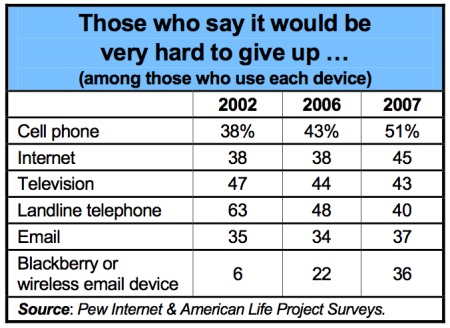
If you’re not already subscribed to the Pew Internet & American Life project reports, go ahead and get the RSS feed or add the site to your browsing plans. They’ve got two reports out this week:

The Pew Internet reports are great for survey data and some broad conclusions about trends of Internet usage in the United States, oftentimes broken down by demographics.

The Paterson innovation series

Robert Paterson has begun a multi-part series on innovation in the public media space around the country. For anyone laboring on new media projects or working to promote new media (especially connective community media), this is a must-read series.

The posts so far…

I’m expecting more posts soon, probably on KETC‘s work in St. Louis (building community around shared media and history), WOSU‘s work in Columbus (bringing the online community into station engagement), and Ideastream in Cleveland (blending a dual licensee with fellow nonprofits and the community).