PublicMediaCamp thoughts and project coming

pubcamp

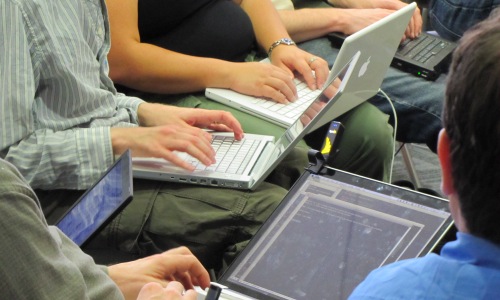
I’m currently in Washington, DC, about to board a flight home to Anchorage. I’m still thinking about the weekend’s activities at PublicMediaCamp. I have session notes to post to the wiki, I need to edit up and post the video I shot and I need to get rolling on the project I agreed to start. Sheesh!

But for now I have 14 hours of flying, a short night, and then back to my day job. In the mean time, thanks to @corbett3000, @acarvin, @jdcoffman and everyone else that supported and attended the event.

Should public media make Education its mission?

UPDATE: I added some comments about what “education” means to me at the bottom of the post.

O'Reilly RadarAn interesting new article was posted last week that caught my eye (thanks to @kevintraver):

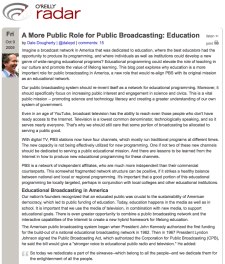
A More Public Role for Public Broadcasting: Education
by Dale Dougherty / O’Reilly Radar

The gist of the article seems to be that public media — though Dougherty focuses almost solely on public TV — should use it’s ample broadcasting bandwidth to focus on educational content, from traditional kids programming up through lifelong learning and civics topics. Using TV is considered better than using the web for accessibility reasons (which broadly makes sense given the cost of broadband in this country).

While I like the idea in broad strokes, I think Dougherty is missing a lot of insider knowledge of the industry as it exists today and how it’s funded. So I submitted a comment to the site that goes like this:

This is a nice idea that will never happen. At least not without a huge change in direction for public media and government (i.e. voters).

Whether or not education / lifelong learning was in the 1967 PBA is now irrelevant. Public media institutions have drifted far from education over the years and aren’t coming back. Why? Because education doesn’t make enough money to be self-sustaining. Which is why taxes pay for schools and students pay for college.

With all due respect to Mr. Lippincott and other former colleagues in public TV, let’s get real. PBS’s best work is done in children’s programming and it’s marginally educational. The only way it’s strongly educational is with deep parental involvement (rare) or direct classroom tie-ins in schools (limited for political and time management reasons).

To make the Education mission a reality in public media, taxpayers would have to agree to foot the bill of perhaps $1-2 billion annually. That would be cheap for what we could get, but not likely. Further, it’s becoming very clear that education via online video and other means is exploding and to do this work via TV is anachronistic if not downright wasteful.

The short-run plan for PBS: keep doing what it’s doing until it collapses financially (by 2015, I’m betting). Once that happens, the children’s programming will remain in a reformatted PBS, the news content will go to a reformatted NPR, and WGBH will gobble up the rest and become a national superstation.

If, on the other hand, you consider quality news a form of education (which, in truth, it is), then you’re talking about NPR for the most part, and they’re the shining hope for public media.

I’m big on having a bold mission, articulating it and making meaningful community impacts. But my take is that well-done news that intelligently informs the electorate in times of turmoil (say, the next 25 years) is more supportable and more meaningful than trying to take on the education monster, in which everyone has opinions of what should be done but no one is really in charge and everyone is underfunded.

UPDATE 14 Oct 2009 2:30am EDT

After a Twitter exchange with @MarkRyanWFWA (follow him!) I realized that I may be defining “education” more narrowly than others would like.

For me, education is a fairly systematized approach to providing information and then following up to ensure the information was understood and can be practically applied. So when I say public media should not adopt education as its primary mission, I mean it. I just mean it in my own way.

Of course, “public media” can even be debated as to its meaning. In it’s largest sense it means creating / curating / sharing media in service of a public good. That’s great, but I do think for practical reasons we have to sharpen our missions much more than that. To me, that means news and information aimed at already-educated (to some degree) people to allow them to live their lives more successfully and make decisions as citizens that have positive impacts.

Education is definitely a public good. I just don’t think public broadcasting, as it moves to public media, should focus exclusively on that mission.

Complete 'Chaos Scenario' speech from Bob Garfield

God bless Bob Garfield. Though he can sometimes be too clever by half in hosting NPR’s On the Media, his new in-your-face book and speaking tour, The Chaos Scenario, hits a home run.

And he’s done a wildly smart thing by sharing his premise in a semi-lengthy but very listenable speech, billed as perfect for marketing, PR and media folks who are already inside a disruption wave.

Excellent listening and good viewing.

http://vimeo.com/moogaloop.swf?clip_id=6873200&server=vimeo.com&show_title=1&show_byline=0&show_portrait=0&color=00ADEF&fullscreen=1

The Chaos Scenario from Greg Stielstra on Vimeo.

Counting on Clay Shirky

If Clay Shirky is right about Here Comes Everybody, then this social media counter is simply the latest proof.

Two astonishing things:

  1. Texting (SMS) is far more popular than searching Google (communication beats search)
  2. This is only the beginning — let’s see these counters in another 5 or 10 years

The conclusion? Mass media is shrinking rapidly at the hands of participatory media. It’s not absolute (one kills the other), but it is a complete reshuffling of the deck.

Are you connecting in your public media practice, or are you broadcasting?

http://www.personalizemedia.com/media/socmedcounter.swf

Learning Google Wave

Google Wave is all the rage. Not sure what it’s about? Here are the 2 things you can review to become an expert (without actually getting an account):

Google Wave Intro by Epipheo

A quick-and-dirty explanation of what some of Google Wave can be. Very popular video from the last couple of days on the social networks.

Google Wave Intro from Google – May 2009

A very long introduction, but it’s very complete and fully geeky for those that are interested.

A new ad game in town

Awesome new entrant in the online advertising biz. And their debut self-promotion piece does more than promote — it actually teaches. Are you paying attention old-school advertisers?

How about you public media? Do you understand how the web isn’t broadcast? There are a few at NPR that get it. What about the local stations?

Please excuse the mess

I’m doing some housecleaning with the site, especially focused on cleaning up the design. I’m also deploying a new logo, like so:

Gravity Medium Logo

Things should be settled in by early October, well ahead of the PublicMediaCamp festivities. In the mean time, things may look a bit messed up and some features may not appear. Thanks for your understanding!

PublicMediaCamp 2009

PublicMediaCampWelcome PublicMediaCamp attendees!

You may be wondering, “What — or who — in the world is Gravity Medium?”

Well, the short version is this:

  • my name is John Proffitt, I currently live in Anchorage, Alaska and this is my blog
  • I’ve worked in public media in the past (radio, TV, web and news)
  • I’ve been blogging here since early 2008 on public / digital media topics
  • I’ve been on Twitter — @jmproffitt — since early 2007; I also have @gravitymedium on Twitter
  • I lead a Twitter community called Alaska Tweets
  • I’m a huge fan of Umair Haque, Seth Godin, Robert Paterson, Clay Shirky, Jay Rosen, Jeff Jarvis and all the hard-working web pros in public media today
  • more than anything, I want the legacy values and services of traditional public media moved to the web, where I and the generations that follow me already live most of our lives

And perhaps most importantly…

  • I’m damn excited to be attending PublicMediaCamp 2009 in DC!

I chose to become a “sponsor” because, well… it’s going to be a great conference (or un-conference, if you prefer) and I feel kinda bad about getting in for free. And, c’mon — let’s get real — a little blog traffic wouldn’t kill me. 😉

Blogging & Tweeting

me-180Right now (early October), I’m firing the blog back up with a revised site design and more postings. Plus, I’m expanding my Twitter community via @gravitymedium. Gravity Medium has been largely quiet for months as I’ve made some professional changes and as I’ve worked heavily on building a social media community in Anchorage.

The PublicMediaCamp has given me new energy to fire things back up. And I owe special thanks to both Karen Olstad, COO at WOSU Public Media and to the Energizer bunny of digital media at NPR — Andy Carvin — for suggesting I attend. They moved me from “meh” to “Yeah!” and I can’t thank them enough.

PublicMediaCamp Tweetup: Friday

Thanks to @acarvin and @jdcoffman for organizing one of my favorite things: a Tweetup!

Photos

My photos from the conference are all posted to Flickr. Check out my photos or all the photos in the Public Media Camp group.

Finding me online

If you’re looking for me anywhere online, you can find pretty much everything on my Google Profile.

How did the 1993 futurists do?

The attached AT&T video has been making the rounds lately on Twitter and beyond. It’s a series of commercials broadcast in 1993 — dubbed the “You Will” campaign — centered on the notion that AT&T is working to bring you next-generation technologies and experiences.

Keeping in mind these commercials were first broadcast 16 years ago (!) and were pitched at the time as futuristic fantasies, it’s remarkable to see how many of these predictions have come true, and come true to a such a complete degree.

For fun, let’s watch the video, then review the predictions and compare them to current technological facts in the industrialized world.

http://www.youtube.com/v/TZb0avfQme8&hl=en&fs=1&rel=0

Borrow a book from thousands of miles away
Status:
Done and improving
In the 1993 futurist’s eyes, a person looks at a book through a digital screen of some kind; as they swipe a finger across the screen, the pages of the book turn. While that’s a very literal representation of a book from a distance, we pretty much have that functionality today in lots of ways. PDF documents make digital documents look the same on any screen or platform, plus the contents are searchable. Google’s book digitization efforts (legal wranglings notwithstanding) are a remarkable and growing achievement. Plus the arrival of Amazon’s Kindle — the first mass-market e-book reader to even marginally catch on — arrived last year. And I have at least two iPhone apps that let you swipe a finger across the screen and watch a virtual page turn.

Interestingly, the notion of “borrowing” a book likely won’t come true. That suggests that only one person can look at or “use” a book at a time. But in a world of digital goods, everyone can have a copy simultaneously. No late fees.
Cross the country without stopping for directions
Status:
Done
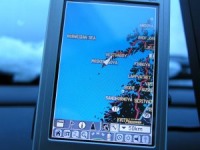
No argument on this one. AT&T’s futurists showed an in-dash GPS navigation system that’s increasingly common today. The devices are even portable. The only thing AT&T did to jazz up what we already have is to put Hollywood-style fly-through structural videos into the screen. Everything else — road locations, spoken directions — we’ve already got.

Send someone a fax from the beach
Status:
Done, but already outdated
Faxes? That’s so 1993. While technically you can send a fax from the beach today, why would you? Nope – today we shoot video with our cell phones and upload the clips to instantly share with friends and family worldwide. Not to mention sending e-mail. All that’s required is a live Internet connection via cell service or WiFi — which is nearly ubiquitous. In fact, with the right phone and connection, you can stream live video from wherever you are to thousands of live viewers anywhere on the ‘Net.

The other thing shown in the video is the fax sender writing on what we would call a tablet PC screen. Tablets are widely available, but rarely purchased these days. The pen-style interface pioneered by the Newton actually shipped for the first time in 1993 and, with an appropriate modem, you could actually send a fax from the device. You just couldn’t do it without a physical phone line yet.

Pay a toll without slowing down
Status:
Done
This was done years ago, especially on toll roads in the more trafficked parts of the country. You pop an RFID chip into your car from the toll road operator, pass through the toll area at a reasonable speed, and your account is debited appropriately.  Simple.  In fact, I had an RFID chip from Mobil years ago that let me pay for gas by simply waving my tiny keyfob near a gas pump pad and everything was handled in the background.  This is old hat.

The one thing the futurists got wrong is the notion of speeding through the toll booth at 90mph, as the driver appears to do in the commercial. That’s just not safe.
Buy concert tickets from a cash machine
Status:
Done, but not in the way AT&T predicted

Cash machines, or ATMs, are really still just for simple bank-related transactions these days. And rightly so. C’mon — you’ve stood behind the person that’s taking so long to use the ATM you wonder if they’re handling their secret Swiss bank account — we don’t want these devices used for more transactions! On the other hand, you can buy anything online, and you can do it from any number of ‘Net-connected devices.

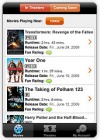
Example: Last spring I was in Washington, DC with family and we decided to see a movie. Not being from the area, we didn’t know what theaters were nearby or what was playing. So I whipped out the iPhone, got a GPS fix on my location, and used the Fandango app to find the nearest theaters and get current showtimes. Then with a few taps, I selected a movie, a time and paid for the tickets instantly. This would have been unimaginable just 3 years ago, let alone 16.

All told, we can buy concert tickets today from far more locations than just ATMs.

Tuck your baby in from a phone booth
Status:
Done, but no phone booth
Leave it to a phone company to see a future for phone booths. We do have Internet cafes — a kind of 21st-century phone booth, I suppose — but people traveling a lot already have their own laptops, most with webcams built-in. With Skype, iChat and lots of other apps out there, you can “tuck your baby in” from anywhere your laptop hooks up to the Internet.

Open doors with the sound of your voice
Status:
Can be done, but it’s not done much or easily
The automated home has always been “just around the corner” ever since the Jetsons were first on the air (1962). You can do this “voice print” thing today, but you have to be really determined. While voice recognition, as a form of biometrics, does exist, it’s not widely used and not generally in consumer electronics. What you can do fairly easily today is get an RFID key that will unlock the door for you without a word, but just physical presence.

Carry your medical history in your wallet
Status:
Not quite there yet
Google Health, one example of the Personal Health Record (PHR) movement, exists already. So if you’re determined to digitize your medical records and you’re willing to take on the perceived privacy risks, you can do it right now. Info in your wallet? Well… sort of. You can bring up your data on any Internet-connected computer with your username and password, so there’s that. And again, if you’re determined and willing to take the risk, you can store the same data on a USB flash drive — and that would fit in your pocket.

Generally speaking, digitization of health info continues to move incredibly slowly, probably due to privacy worries and the lack of standards for data interoperability (despite early work on the HL7 standard and work on HIPAA). Plus, there are no economic incentives for the players involved. So this will come someday… someday…

Attend a meeting in your bare feet
Status:
Done
You’ve been on conference calls where there are screaming children or barking dogs in the background, right? Yeah, me too. This one’s definitely done. Maybe overdone.

Watch the movie you want to the minute you want to
Status:
Done
Video-on-demand has been around in one form or another for many years now. It’s not universally available and it may require “extra” subscriptions to your cable, satellite or fiber provider, but it’s out there. If you consider computer screens as legitimate viewing devices, you can also add Hulu as an example of a monstrously huge on-demand viewing service.

Learn special things from faraway places
Status:
Done
Distance learning is old hat on most university campuses these days. It may not be as flashy or as interactive as the example shown in the commercial, but it’s out there. Video, audio, remote interactivity options — it’s all there. Not to mention discussion boards, blogs, real-time chats and more.

So what’s the score? Of 11 predictions, 9 are already a full reality (82%) while the other 2 are largely done while still under active development. If you’re willing to work for it, the futurists were completely on the ball on all counts.

Pretty amazing.