Newsflash: I’m no longer working for KETC in St. Louis.
Following a quick 8 weeks in the shadow of the Gateway Arch, I’m left humming one of Ella Fitzgerald’s signature Cole Porter songs:
http://www.youtube.com/v/MoiLkCojxAM&hl=en_US&fs=1&rel=0
And with Ella reverberating through my head, allow me to share a bit of the story.
By the way, for anyone seeking dirty laundry: I’m going to disappoint you. But I will unpack what I’ve learned and perhaps that can help you in your career. Because I’ve got new insights into job situations I’d heard about, but hadn’t personally experienced until now.
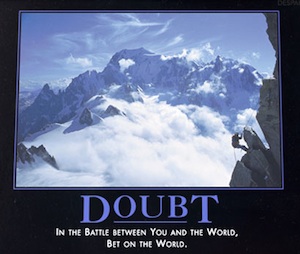 Doubts
The trouble started in January.
I participated in a weekend project kick-off for KETC’s new immigration-focused public service media engagement, a follow-up to the successful Facing the Mortgage Crisis. I flew down from Anchorage to partially advise and pseudo-interview for an online media role in the project.
Sounded great. But from the get-go I had several intuitions things weren’t quite right, at least for me. And I promptly ignored every sign, assuming I was being excessively cautious or pessimistic or silly or… something.
Some of the early signs I ignored:
- I was never excited by the project’s topic: immigration. Yes, immigration is a major national topic these days and it has interesting dimensions, but it’s not something that ignites a passion for me. I figured that didn’t matter because I was interested in the work, the methods, the tools and approaches, if not the topic itself.
- Pure-play public TV stations make me nervous — I’m not a fan of the current programming or fundraising models (declining cultural relevance and revenue), yet that was the core nature of the host station. I figured this, too, didn’t matter because the project was something very new and it was isolated from the TV business.
- I’m a huge fan of news as a public service, yet most public TV stations, including KETC, have no local news capacity. In this case I consoled myself with the knowledge that the St. Louis Beacon lived within the walls of the station, despite:
- being a separate nonprofit;
- having a written-word focus rather than video focus; and
- having little to do with the project.
- The project had funding only for 1 year. This created two concerns:
- I’d likely lose my job in a year (though I was willing to absorb that risk for the opportunity).
- I struggled with the conflicting ideas of building long-term community engagement online when the project has a definite end in the near future (i.e. please join us online, see ya later).
Any one of these doubts was minor and I easily rationalized them away. But I failed to see them as a whole. And the pattern of doubts continued.
I won’t go into every issue, because it doesn’t really matter now. But there were niggling concerns that popped up all along the way. Conversations ahead of my arrival felt either rushed or delayed. Project goals remained nebulous (which I thought was a good thing for a while). I felt “wanted” for the project, which was great, but then my concerns about fulfilling the outsize expectations grew.
On the Ground
Once I arrived the first week of March, I started to get settled, but never felt at home, either at the office or in my apartment after-hours. The team’s space wasn’t done. I was using my own computer at the office and had WiFi problems. I had a noisy upstairs neighbor at home. I was working on team collaboration stuff rather than public-facing web stuff (which turned out to be a big mistake). The project goals were still being defined. My wife and I were adjusting to the separation. I spent too much time making social media contacts in the area, looking too far down the road. I learned there were factions within the company that resented my hiring. Nothing felt grounded for me.
There was even personal stuff getting in the way. It began with the drive down from Alaska — my driving companion effectively started divorce proceedings via text messages, emails and phone calls in the car. That was odd. But I also took time to attend my mother-in-law’s funeral in April, while seeing my wife for the first time in 6 weeks. Then I fell ill while visiting CPB and was effectively out of commission for a week with strep throat — the first time since I was a kid.
All in all, from March 4 to May 6 I never felt safe, whether at home or the office. And let’s be clear — I’m just recounting my perceptions. I never felt anyone was “out to get me” or felt unwelcome. Indeed, my coworkers were delightful people and were sympathetic to the challenges I was facing.
Communication, Priorities, Goals
Meanwhile, in the project work, there were things that needed to be done. Quickly. Yet my communication with my supervisor seemed to skip a beat each time we talked. I’ve never had that experience before. Looking back now, I would call it what I’ve heard others say about other jobs and people: “it wasn’t a good fit.” I never really believed in that notion until the last couple of weeks. But it’s real, and it was disorienting. Whatever the reason — or maybe no reason at all — we talked past each other when it came to priorities or speed or goals, or maybe I simply wasn’t listening.
As I told my boss just last week: I’m not used to failing at things, I’m used to succeeding. My typical approach is to take on something new and delight people with better-than-expected results. But that didn’t happen this time. I felt horrible about it, which only compounded the situation.
At the end of the day, I was deeply unhappy with the job. And they were deeply unhappy with me. Sadly, I was starting to see ways forward in the final week-and-a-half. But it was too late to recover — the ship had taken on too much water.
 Lessons Learned
As I shared a brief version of my story with a friend late last week he said, “When you get older, you’ll learn to listen to those voices in your head that warn you there’s something amiss.” Well, I’m older now. About 8 weeks older on the calendar, but a few years older in experience.
What have I learned that you might be able to use?
- If you have doubts, don’t minimize them. Logically evaluate them as best you can, but keep in mind some doubts are not logical on the surface, relying instead upon subconscious cues linked to your values, perspectives and experience.
- When you wager your career on a risky opportunity, you can, in fact, lose the game. Good intentions, though important, aren’t enough.
- Know what levels of risk you can live with comfortably. If you stress yourself out over the risks you’ve taken, the situation actually gets riskier.
- You cannot think creatively if you don’t feel “safe” in your life. Get to know what it is that makes you feel “at home” and get those things in order first.
- Find out what is driving your boss and CEO forward. “Driven” people upstream from you can be a boon to your career if you share a common vision and communication style. Or they can be dangerous. Ignore their motivations at your peril.
- Yes, there is such a thing as a “bad fit” in the working world, even between hard-working and otherwise successful, well-meaning people. Bad fits make everyone unhappy, and it’s better to figure that out and make changes quickly than to drag it out indefinitely.
- It’s up to you to get specifics on desired work outcomes up front. Know how fast an employer wants things done, and to what level of perfection. Know how you will be evaluated. If you can’t figure these things out, skip the opportunity.
- Never let anyone hire you if they think you walk on water. Because you don’t. And when you don’t walk on water, you’ll feel bad about it and they’ll be disappointed. Everyone loses.
What’s Next?
The first question I’ve gotten from close colleagues is, “Will you stay in public media?” The most honest answer: I don’t know. With dwindling budgets, drifting missions and more than a smidgen of drama here and there, it’s certainly an open question. I maintain my passion for public service media — there’s a need out there and a tremendous opportunity to serve community needs in new ways — but I may be able to serve in ways beyond employment.
For now, I’m focusing on opportunities in the Information Technology (IT) field, whether in nonprofits, healthcare or other businesses. I’ll remain open to public media options, but I have a much longer history in working with IT infrastructure projects and services (networks, servers, security, desktops, telephony, etc.). Not to mention I enjoy the work.
As for location, I’m in St. Louis at the moment, and I’m looking for work here, but I’m also looking at cities all over the place, including back in Anchorage, where my wife is still living and working. Other potential cities include (in no particular order):
- WEST: Spokane, Boise, Denver
- SOUTH: Austin
- MIDWEST: Columbus (OH), Kansas City, Indianapolis, Minneapolis/St. Paul, Madison, Des Moines, Louisville
- EAST: Asheville and Raleigh, NC
 Just One of Those Things
As I look back over the past 8 weeks I’m realizing just how fast everything happened and I’m amazed. I’ve never moved from new hire to former employee in 2 months before. I’m disappointed with the way things turned out, but I’m also deeply relieved that the stress is over and everyone can move forward.
Plus, Cole Porter’s lyrics have a new meaning for me:
If we thought a bit of the end of it
When we started painting the town
We’d have been aware that our love affair was
too hot not to cool downSo goodbye dear and Amen
Here’s hoping we meet now and then
It was great fun
But it was just one of those things
I wish the team at KETC the best. They’ve got a great project on their hands, they’re good people and I’m sure they’ll pull it off.

 Now a new project is beginning; one focused on issues around the topic of immigration. They’re even remodeling part of the building to house the new local nonprofit news service — the

 Gravity Medium