FINAL CUT: The Future is Public Service Media

Here’s the final cut of my recent presentation for WOSU Public Media in Columbus. This time I’ve got a video I created myself plus a complete set of slides and links back to all the original material.

In this case, the video is a revised presentation deck with a brand new voiceover track. This way, if you couldn’t see or hear the presentation clearly in the video shot at WOSU, now you can get the slides and the talk directly.

First, the video, then I’ll follow up with a final collection of links.

http://vimeo.com/moogaloop.swf?clip_id=8326319&server=vimeo.com&show_title=1&show_byline=1&show_portrait=1&color=ff9933&fullscreen=1

Final Cut Presentation Material

Additional Material

Public Media's 'Dreadnought' pulling into port at KETC

Run, don’t walk, to Robert Paterson‘s blog to read his new post on the transformation in progress at KETC in St. Louis.

No one knows exactly what forms public service media companies will take in the future, and it’s likely that several successful forms will appear. But KETC looks to be the first in the nation to have commissioned the construction of a new model.

Paterson has been working with KETC since before the launch of the Facing the Mortgage Crisis project, which started at KETC and then expanded to 30 more public broadcasters across the country with the help of the CPB. He’s been lucky enough to work with CEO Jack Galmiche and crew and to see this transformation up close. The plans — physical and logical — are remarkable.

What KETC is doing is revolutionary in the public broadcasting world. While the particulars may not fit every station nationwide, the themes should. Whether or not each element in the plan is “perfect” is irrelevant — the most important thing is that they’re experimenting, all within a reformulated goal. KETC is getting passionate about public service media, and not merely public broadcasting.

Read that post. It’s insightful and exciting.

Additional links from WOSU presentation

In prepping my presentation for WOSU Public Media last week, I spent a lot of time reviewing other people’s recent presentations, stories, blogs, data and so on. Really, I read stuff every day related to digital media, so tracking it all back down is kind of hard. But I wanted to make sure I gathered a list of links and other resources folks could review if they wanted to dig deeper than my presentation alone allowed. So here they are, in no particular order…

From Broadcast to Broadband: Redesigning public media for the 21st Century
Discusses how public media must change to meet the challenges of a 21st century media universe. Jake Shapiro, PRX and Ellen Goodman, Rutgers; presented at Harvard’s Berkman Center for Internet & Society. Note: The pie chart showing CPB expenditures is incorrect. There’s an extra $71M included in the TV programming slice that shouldn’t be there.

The Future of News
This was a conference held at MPR in St. Paul, MN in November 2009 bringing together journalism leaders and pundits from public and commercial media in all formats. Lots of video and other resources. Props to Julia Shrenkler for tons of work on this one.

The Good, the Bad and the Ugly
Michael Rosenblum offers a critique of the folks that appeared at The Future of News, as linked above.

A Collection of Social Network Stats for 2009 (Jeremiah Owyang)
A frequently-updated list of social media statistics, including links, for all the major services.

The Chaos Scenario (video)
The Chaos Scenario (blog / book)
Bob Garfield, co-host of NPR’s “On the Media,” has written a book and built a wide-ranging presentation on how current media companies are faced with a chaotic world that’s changing the fundamental models of media economics. It’s a long video, but a good one.

Continue reading “Additional links from WOSU presentation”

Presentation: The Future is Public Service Media

UPDATE: In the comments, Tom White from the CPB noted that the math for TV production and operations noted in the presentation — stating that 84% of CPB’s annual appropriation goes to TV — is incorrect. In fact, for both FY2009 and FY2010 it’s about 67% of the total, not 84%. I based my 84% figure on the presentation slides offered by Jake Shapiro and Ellen Goodman in their November 3 talk. The figures in their presentation — on slide 15/32 — miscalculated CPB’s allocations by more than $70,000,000. I apologize for the error and will attempt to update my slides soon. In the mean time, keep in mind that 84% figure is wrong.

Last week I gave a presentation at WOSU Public Media in Columbus, Ohio, sharing with them some of the trends in media generally, talking about the economic pressures of a changing media landscape and sharing some ideas of how the station might change to meet the needs of the community in ways that transcend mere broadcasting.

WOSU was kind enough to gather a great group of people from across the company, plus one visitor from ThinkTV in Dayton and one from WYSO in Yellow Springs. (I’m not listing names here because I didn’t get permission to mention anyone specifically.) I’m hopeful some of the elements in the presentation were at least thought-provoking. One person told me afterward that he came away with three new ideas. Awesome!

I’m posting a ton of presentation links here so anyone can view and download the materials as desired. As I mentioned to a former colleague of mine, the materials are free for the taking, remixing and so forth under a Creative Commons license.

If WOSU posts a YouTube video of the live presentation itself, I’ll embed it here later. And I may just do another version of the presentation in voice-over style anyway.

I’ll start off with the embeddable SlideShare presentation, then include more links below.


Presentation Downloads

The Future is Public Service Media – Keynote (Mac) format (242MB zip)
This is the complete presentation in its native format, including all embedded videos, graphics, transitions and so on. Playback requires iWork ’09 on a Mac.

The Future is Public Service Media – QuickTime format (638MB mov)
Complete presentation in a clickable “movie” format (click to advance, click links to get to the web) that includes the complete video files inside the presentation. Playable on any Mac or any PC with QuickTime installed.

The Future is Public Service Media – JPEG images (8MB zip)
This is all the slides from the presentation as individual JPEG images.

The Future is Public Service Media – PDF (6MB PDF)
This is all the slides from the presentation in a single PDF document, readable on all computers with Adobe Reader or another PDF application.

The Future of Public Media

foggy highwayIn a little over a week, I’m supposed to appear at WOSU Public Media in Columbus and tell them what the future of public media will be.

Ha! Okay, that’s not going to happen — I can’t really tell the future, especially when it comes to public media.

But I am thinking deeply about it, and a recent post I wrote has me thinking more broadly about the future, with respect to public broadcasting / public media / nonprofit media / what have you. And that post ended with a simple question:

Are public media’s best days behind it or are they yet to come?

Like so many things in life, the answer to the question is driven by your personal history with and perspective on “public media.” But it seems to me the future is either what we make it, or we simply agree to take whatever happens to us.

That’s what I’m thinking I’ll explore with the group at WOSU: are we going to take the future, or make the future?

The Media Inflection Point You Can’t Avoid

We’re in the midst of the biggest media reshuffling in history. Literally. There are more people on the planet today than at any time in Earth’s past. And almost all those billions of people have contact with some form of media every day — print, radio, TV, Internet, and all the forms therein. The 20th century witnessed the mass adoption of electronic media (telephone, radio, TV, Internet), ending with the mass popularization of the web in the industrialized world.

Not since the adoption of the printing press and its mass-produced written material has human society been faced with such an expansion of media to the point of ubiquity. Distribution of the written word fundamentally changed how humans think, gather information, communicate, organize, share, learn and so much more.

Similarly, radio and TV have had a huge impact on human society. But they’ve simply continued the mass distribution (broadcast) phenomenon of print, in which a cloistered few control what media is produced and distributed and how it’s experienced.

In contrast, the web — with its many-to-many decentralized and self-organizing design, coupled with a capacity for storing and delivering video, audio, text, photos, and structured data — changes the fundamental ways in which we use media. Indeed, all our older forms of media are maneuvering to either combat or leverage the power of the web for themselves.

By the way, let’s remember we’ve only just begun this transformation, we’re only now starting to see possibilities of what this will do to us or for us. Today we’re raising the world’s first generation of children who will never live without the web and its capabilities. For them, instant ubiquitous communication, sharing, and participation is a birth right.

In short, the world is undergoing tremendous change because media — a force in all our lives — is fundamentally changing. The future of media is being created right now, much more so than 10, 20 or even 100 years ago.

Given these changes, do you let the future happen, or do you find a way to make the future?

(Oh, and bad news: you can’t avoid making this choice, consciously or unconsciously.)

The Future: Taking It

Public broadcasting has largely been waiting as this media revolution takes root. Waiting to see the patterns emerge. Waiting to see what commercial media companies do. Waiting to see what the audience wants. Waiting to see the “business model.” Waiting for the CPB to fund this plan or that plan or give instructions. Waiting for NPR or PBS to make it all better.

This approach assumes the future is knowable, and that it’s more knowable the longer you wait. Public media companies using this strategy are betting if they sit back and let the future happen, they can re-engage once everything “settles down” and “success” can be achieved by following an established plan.

The flip side is that if the current business model collapses (as the elderly population supporting public broadcasting dies) but the magical solution hasn’t been delivered yet, then you go out of business. “Oh, well. All good things come to an end. It was inevitable. Nothing I could do.”

The “taking it” approach also presumes a good future is achieved by repeating past success. This is music to the ears of folks that built their careers shooting big TV shows, or built NPR from the ground up, surviving lean times to reach the “safe” place they’re in today. If we just keep pumping out TV shows, we’ll get viewers and advertisers and money, right? If we just keep playing good music or running national news programs that people like, we’ll get enough money to make it and that’s fine.

Finally, using the wait-and-see approach is less messy, more predictable. Sure, as your public broadcasting company shrinks, some people will lose their jobs, but that will be a slow bleed, and you can just hold on longer than anyone else, right? Talk to someone that worked at a newspaper recently — they’ll draw the roadmap for you.

NOTE: This is the strategy in play in Alaska right now: consolidate the community-based stations into a statewide entity to save operating cash and hope by the time the reorganization dust settles a business model will be “blessed” by CPB or “proven” at other stations. It’s the classic wait-out-the-storm strategy. Only this storm will rage for a generation.

When it comes to the future of public media, “taking it” has its charms — most notably predictability and an unquestioned reverence for past success. But it’s an inevitable failure for you, for the company and for the community the public media company ostensibly serves.

The Future: Making It

Where “taking it” passively hopes for a brighter future (despite indications to the contrary), “making it” meets the ambiguous future head-on and searches for ways forward that still fulfill your purpose. Making the future, in such a time of change, also presumes the search for the “best way to do things” won’t end in our lifetimes — an acceptable approach today may not be appropriate tomorrow.

When choosing to make the future, you’ll have to accept some assumptions:

  • you cannot know or predict the future with any degree of accuracy
  • though you can’t predict the future, you must, however, clearly know your mission and purpose as a public service media firm — that’s what gives you certainty in ambiguous circumstances
  • the present and future are significantly different from the past, so repeating past success does not guarantee future success; proposals to repeat past successes must be evaluated as if they’d never been done before
  • waiting for a perfect model of the future means you’ll miss opportunities to learn and/or succeed in the present
  • unpredictability of the future is scary, but guaranteed failure is scarier
  • failure is fine; failure is a teacher; failure is a universal experience and can bring people together
  • courage is sexier than cowardice; courage will generate more and better support via collaboration, funding and mindshare; people are drawn to ambitious projects and people

If you’ve opted to “make the future,” it also means accepting the fact that you are not an expert in what you’re doing. That might be the hardest pill to swallow for public broadcasting veterans. “Not an expert? Then why do it?” Here’s why: You can’t be an expert on the never-done-before. No one can. But you can be smart, experimental and you can ask for help. Bonus: Humility builds community respect, which leads to support.

The Best Days of Public Media

Are public media’s best days behind it or are they yet to come?

If you think public media = public broadcasting, then the best days are behind you. Broadcasting, while not worthless, is worth less — it commands less attention and loyalty and gathers less money, while the cost of operation (especially for TV) grows and broadcast loses political power to broadband. There’s a place for broadcasting, to be sure, but it’s not at the leading edge of a public media company that’s making the future. What company puts a weakening, shrinking and economically tired division at the forefront of corporate strategy? Put in the team with new ideas, courage, and a hunger for dynamic growth in the driver’s seat!

If you think public media can only succeed in a calm, cool, collected, neatly organized and predictable organization, then the best days are behind you — because the future, like the present, is messy and unknown. A public media company waiting for the future can only decline while a public media firm exploring new media horizons and new relationships will have to take risks.

But if you think we’re living in an age where public service media can achieve more than in any prior time in history, then the best days are ahead of you. Costs for media creation, distribution and collaboration are falling rapidly, and many are effectively zero. It’s easier to maintain deeper relationships over extended space and time and gather masses of niche interests for public good. There are things you can organize and do today that would have been impossible 20 years ago, and public media firms — if they choose to make the future — can create and enable tremendous value using network effects and a blended influence of broadcasting, digital media, social media and community relationships.

We stand at the edge of an ocean of opportunity — and risk — for ourselves, our companies and especially our communities. The ocean’s waters are rising as the mediated world grows. We can stand firm as the waters rise, or we can try our hand at swimming.

If we swim, we might die. But if we stand firm, we’ll die for sure.

Do your own work

Thanks to @stevesilberman I came across this little article about growing food locally in Britain:

Introducing Britain’s Greenest Town

Now, I’m already inclined to like these stories because I think local food will remain part of a larger localism trend over the next 10 to 20 years as we pass peak oil and go deeper into global warming’s effects.

But there’s a quote in there that caught my eye (boldface my own):

Incredible Edible was originally funded out of the participants’ own pockets. “We were very clear that we didn’t want to look at what grants were available and mould our projects to suit them,” said Mr Green. “We felt that what would work was to start with the town and what it needed. We’d look for money later on.” What the project leaders found was that a lot could be achieved with small amounts of cash. And awards and grants have followed…

This was something I saw in public media (and still see) that drove me nuts: companies taking grant money because it was available and the projects sounded mildly interesting, not because they organically developed a project in response to local needs.

We did it in Alaska when the stations took money to create a replication of the “Portal Wisconsin” project from several years back. No one really wanted to do the project — hell, the company didn’t even believe in the web as a viable platform to begin with — but there was $10,000 in cash sitting there, waiting to be taken. We ended up not doing the project and returning the money (thankfully). But that wasn’t the only time funny funding came along.

I worry about other projects (one in particular comes to mind right now) that drives public media firms to do work they shouldn’t really be doing.

Heres a concept:

  • find out what the community wants or needs; do a “listening project” like IdeaStream did a few years back
  • develop a project or service that would fit the community’s needs
  • if you really need cash to get started, then start smaller so you need less cash and can fund it out of pocket
  • get some early successes, then take your story on the road to raise more money if needed

Social media works this way, too. First, you listen. Then you talk. Then you get together to do something new as a team. Later you raise money.

I know there’s an additional desire to ingratiate one’s public media company with the CPB or with the Knight Foundation, so people sign up for projects that don’t quite fit but are “close enough.” And I know these projects are a time-honored tradition in the public media system — it’s just what everyone does.

But maybe that’s one of our problems. We’re not working for our communities, we’re working for someone else, somewhere else.

Let’s do our own work. And let’s start by listening.

Pirates, legless dogs and public media

Pirate RadioAt the end of Thanksgiving weekend I went out with friends to see the new movie Pirate Radio.

For those that don’t know, British radio was pretty tightly controlled just at the time that British rock and roll artists exploded onto the international pop music scene. Youth and music enthusiasts were basically deprived of rock on the radio. So a natural reaction appeared: enterprising young scallywags set up radio transmitters on ships floating in international waters off the British coast, beaming prohibited rock music and youth culture back into the mainland.

It’s not a great “film,” but it is a fun movie. And it reminded me of what I see so little of in public media circles today: Passion and joy and revelry. More on that in a minute.

Meanwhile, back at the office, I read the new column by IT strategy writer Bob Lewis: Legless Dog Syndrome. In it he asks the provocative question: What if you had no authority, as a manager, to make any of your employees do their jobs? What if you were a leader, but you weren’t “in charge?” He then goes on to talk about how, in a well-run organization, you don’t need control, because why you’re there and what you need to do are so patently obvious to everyone. To wit:

In well-run organizations, everyone understands:

  • What the organization exists to accomplish — the mission.
  • How the business works and how it connects to the external marketplace — the business model.
  • How the organization is supposed to evolve over time — the vision.
  • How the organization is supposed to get there — the strategy.
  • How they fit into the mission, business model, vision and strategy.
  • How to do their jobs exceptionally well in order to make it all happen.

And in well-run organizations they buy into all of this, have good reasons to want it to happen, find it energizing, and have no “perverse incentives” to take them in different directions.

Put together, these two scraps of media — Pirate Radio and Lewis’ take on the old legless dog joke — spell out to me what’s missing in much of the public media universe today: Passion and Purpose.

Passion

The “pirates” of Pirate Radio were there for the love of the music. They didn’t care about the privations of living on a rust bucket in the middle of the North Sea. Their mission — bringing the joys of a new age of music to millions across Britain — sustained them, gave them purpose, kept them engaged. They had a shared view of the inherent value of cultural expression through music (even if they’d never describe it that way) and were willing to do almost anything to participate in that process.

Passion gave them power, made them real to the people listening hundreds of miles away on land. Sure, there were advertisers and money involved, but these folks loved their work because they believed in it, not because they were getting rich (which they weren’t).

Is this true of most people working in most public media firms in the country today? Are they (or we) passionate? Really passionate?

It’s hard — if not impossible — to measure, but I’d wager that folks working in startup public media firms, like spot.us or the Texas Tribune or even specialty pubmedia firms like WXPN have more passion than most, and it gives them power. Maybe the passion will last for them, maybe it won’t. But they’ve got something that the average town’s local NPR affiliate isn’t likely to have: deep-rooted affection for the change they’re bringing to their world. They’re making a difference, an impact. They’re not working on the status quo; they’re creating something new.

How much change can you bring into the world by inserting local weather into Morning Edition? How much passion does it take to rearrange PBS programs into a broadcast schedule that’s virtually identical to 300 other stations around the country? Sure, the biggest legacy stations have pockets of creativity where old-school media types get to make media the way they always have. That’s a passion pursuit.

But for a wide swath of professionals working in public broadcasting today (some 40,000+ people), I’ll bet most are going through the motions at this point. Too many are fixated on a proud legacy (and there are still things to be proud of today, of course); many have lost their way and don’t know how to make “big media” on eviscerated budgets (because you can’t). One year you have a staff of 150 people and do all kinds of crazy projects that you love. A few years later your staff of 75 is shell-shocked and just hanging on to what vestiges are left of a passion borne of a long career in the old media world.

Under circumstances present in most (by number) public broadcasting outfits, it’s hard to muster passion when you’re watching your work diminish in scope, impact and value. And it must be especially galling to see your high-craft work disappear into the ether as new media forms get so much more buzz — buzz beyond their “real-world” value.

But here’s the deal: Passion will almost always beat proficiency. And in an age where old-school media economics are collapsing (as less advertising spreads across an expanding media universe), the New is sustainable because of its passion, but the old is not because of its baggage. The asteroid has hit, and the small mammals have a distinct advantage over the dinosaurs.

Of course, you can’t win on passion alone. The radio pirates still had to broadcast their work. They still had to keep the ship afloat. They still had to buy fuel and food. But had Rupert Murdoch started a pirate radio operation with PR, accounting and lawyers on the payroll, it would never have made it. Passion powered those boats, not cash.

Public media people need to find their passion.

What is it? Making good video? Great! Then you need to find a way to make video, even if that leads you away from your career at the local PBS affiliate. Are you all about kids education? Awesome. Then dig in where you are if you can, but if you can’t, move on. Is creating trustworthy news and information, to help educate the electorate, hold officials accountable and sustain democracy your passion? Fantastic! Get to it, and keep in mind your best work might be achieved outside the legacy public media companies — some of the most innovative work in journalism isn’t happening at established companies.

It’s not that public media needs a talent exodus. But we do need those that are just biding their time until retirement to move along early, along with those that just wanted a “safe” job where little is expected of you and no one is ever fired. We need a passion explosion. And it’s not about age. You can be passionate at any time in your professional life.

But the passion argument demands more than just ecstatic devotion — there must be a reason for it. We need to work passionately on something together…

Purpose

I’ve told this story more than a few times…

When I moved into the public media world a few years back, I felt like I was joining a company, and a national community, composed of people on a mission. I’d worked in nonprofits before, and I’d always liked putting mission above sheer profitability, but this was the first nonprofit where I felt like there was a real underlying purpose.

These were the days, however, when the web was so ascendent that even the old school public broadcasting managers were realizing that a generation was growing up with less of a need — or maybe even no need at all — for public radio and public TV. The iPod came out in fall 2001. By the time I joined public media just 3 years later, podcasting was introduced soon after, broadband penetration in the home passed 50% and it was clear the world was not the same.

So I, and so many others around the country, began to ask…

Well, okay… there are new media outlets appearing all the time now, so maybe we need to go back to the drawing board and ask ourselves: “Why are we really here?” Because if we can answer that question, then we’ll know what things we should bother doing and which things we can ignore as new media outlets and formulas develop. Because we can’t sustainably be all things to all people. We need a clear mission so we know what’s in and what’s out.

With that in mind, I started to ask my colleagues — most of whom had worked for decades in public media — Why are we here? What’s our true mission? Who are we here to serve? If there were only one thing left we could do, what would it be?

I thought these were marvelous questions. We could all read the 1967 Public Broadcasting Act again, with fresh eyes, and envision a present and future that’s reimagined, probably staying true to core principles from 1967, but without being bound to 40-year-old technologies or notions of public service. What freedom!

Yeah. It didn’t work out like that.

Instead, my questions were irritating to those that literally built their careers over the same time span in which public broadcasting developed so successfully.

“What’s our mission?”

“Our mission is public broadcasting!”

“Right. But what does that mean, especially now — now that everything is changing?”

“It’s public broadcasting! Look, you just haven’t worked here long enough to understand. But the rest of us know what it means.”

“Then why can’t you explain what it is, simply, clearly, and without using the words public or broadcasting? Can you tell me what the mission is without listing what the company does?

“! ! !”

I never intended to frustrate, but I did intend to provoke, to start a deep conversation about Purpose. I feel my questions remain unanswered to this day.

Coming out of that experience, I think there are three critical questions for public media companies (and any company, really) to answer for themselves:

  • Who are you? (identity, not branding)
  • Why are you here? (mission or purpose)
  • Why do you deserve my — or anyone’s — support or participation? (case for support, call to participation)

And the challenge isn’t getting some disengaged committee trapped in a conference room for half a day to give any old answer; the challenge is giving good answers to these questions. Simple, clear answers in human-scale English; answers that are inspiring, trustworthy, honest and needed.

We need Purpose. Shared purpose. Reasons for getting out of bed in the morning. Reasons for showing up at work early and working late. A purpose to power us when it feels like the ship is sinking.

Is continuity enough?

In The Art of the Start, Guy Kawasaki says that one mission a startup can have (among others) is, “Prevent the end of something good.” It feels like that’s much of the Purpose out there in public media land today. Budgets shrink. Staffs shrink. Advertising income shrinks. And so on. So pubmedia professionals are working doubly hard to keep the ship afloat.

But I would say Kawasaki misses a point: Continuity of something old, something anachronistic, is not enough to keep people energized; it’s not something many people can get Passionate about.

People can get passionate about making something new: a house, a baby, a business, a painting. They can even be passionate about preservation in some cases (which is probably why pubcasting membership receipts are flat even as membership rolls shrink).

But media is not merely a monument to the past — it’s a living thing. We create it every day. We consume it every day. How do you gather passion for continuity of the old in perpetuity?

Personally, I think public media simply maintaining past practices until they collapse under their own economic weight is not enough, and it’s an insult to that part of the community that has moved on, media-wise, and is waiting for us.

Passion + Purpose = Meaning
Imagine a public media company that has a clear purpose. A purpose that everyone knows and understands. Imagine it filled with people passionate about that purpose. That’s a group of people making meaning for their community and for themselves. It could be music or news. It could be public service via information curation and distribution. It could be community building. Wouldn’t that be awesome?

More than anything else we seek Meaning in our lives, which to me is a unification of Passion and Purpose. I haven’t found it yet in a public media firm (though I’ve experienced flashes of it here and there — sparks and smoke that suggest a fire).

It’s time public media firms get off their duffs, articulate a clear purpose and gather a crew that’s willing to head out on the proverbial rust bucket in the North Sea to share their passion with the world.

The kids programming folks at PBS seem to have it. The news folks at NPR seem to have it. There are other pockets out there, too, I’m sure.

But the broad swath of “stations” out there need to stop whining about losses and changes and how things just aren’t the same anymore and “if only” we could do this or that “everything would be fine.” Here’s a news flash for ya: Everything IS Fine. The present is what it is. Hoping for the past to come back is a waste of energy, money and time. Give it up. Make a great future with the resources we have right now.

We have more opportunity in front of us for public service and community building now than ever imagined 40 years ago, or even 10 years ago. When you look past legacy systems, the cost of creating and sharing media today is cheaper than it’s ever been. Recording, editing, curation, distribution, aggregation, sharing — it’s unbelievable what we can do these days.

All ahead, or all reverse?

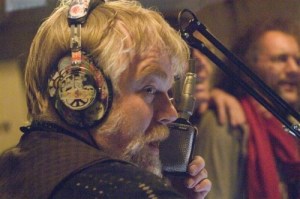
In Pirate Radio, the “Count” character (played by Phillip Seymour Hoffman), remarks that these are the best days of their lives, and it’s a pretty depressing realization for him. He knew he was at the center of Passion and Purpose meeting for a brief time on a ship in the North Sea and he’d never forget it.

So here’s your takeaway question…

Are public media’s best days behind it or are they yet to come?
Big Webcast on Tuesday (11/03)

UPDATE: The webcast video and audio is now posted.

For those that may not yet have seen a promo for this webcast, here you go — this is a good one:

From Broadcast to Broadband: Redesigning Public Media for the 21st Century

  • Ellen Goodman, Rutgers University School of Law
  • Jake Shapiro, Executive Director, Public Radio Exchange (PRX)
  • Presented by the Berkman Center for Internet & Society
  • Tue, Nov 3, 2009
  • LIVE webcast: 12:30 p.m. Eastern / 9:30 a.m. Pacific
  • Archived webcast to be posted later

Get the full description here

Watch the live webcast here

See the archived copy of the webcast here (later)

PublicMediaCamp session notes posted – What Next?

by Elephants on Bicycles (Flickr)

It took longer than expected, but I finally posted notes from my PublicMediaCamp session “Creating an Online Unconference to the PubCamp wiki.

It’s packed with details from the session and links out to relevant materials. Not to mention two funny / instructive videos from recent Intel commercials.

From here, though, the real work begins.

I have a ton of handwritten notes I took while flying home from DC. And I’ve been thinking about this for two weeks. I plan to convert my additional notes next, fleshing out the ideas that emerged in the session in much greater detail. However, I’m concerned the project would become too wrapped up in my own thoughts of what should or shouldn’t happen with this site. I need more input.

For example, I had a good e-mail exchange recently with Kristin Calhoun at PBS. She gave me more ideas on what we could do with this new site / online service. And I’m sure she’s not the only one.

So here’s what I propose:

  • You and I reach out to anyone we think might be interested in participating in the leadership of this new online community. We make them aware of what we’re talking about — point to the wiki entry — and see if they’d be interested in not only hearing more, but in shaping the future of this service from the beginning.
  • Ask that everyone take this survey about the formation of the community
  • We exchange e-mails, building a list of interested parties and probably moving that list to a Google Group or similar system
  • We set a date for a live phone conference with everyone that’s interested in materially participating
  • Meanwhile, I write up my additional notes on the community idea and post them either to the wiki or this blog, then share them with everyone
  • Finally, if you’ve got ideas for the community, you take a few notes, too!

I’m excited! I think we’ve got something here. The new/digital/social media community inside public media has needed something like this for a long time — the conference that never ends, a support group and a resource for ideas and new technologies.

Let’s do it!

Economics of Abundance

Here’s what most public media outlets still don’t get — especially in the corner offices. If you get this economic concept, you’ll understand why creating media and throwing it out there isn’t enough.

There are two scarcities that public service media firms can utilize immediately, and probably more that haven’t yet quickly come to mind:

  1. unparalleled-quality news / information / data / analysis, especially when coupled with excellent curation
  2. leadership and convening of tribes by geography and public service interest

News, even top-quality news, is not enough. Because once it’s released into the digital world, the price falls to zero or near zero, so you can’t monetize it directly. You can ask for donations to support your public service (sound familiar?), but the appeal to altruism — while it works to a degree — doesn’t achieve full financial support. (Look at the balance sheets of public media companies across the country; they don’t live by altruistic donations alone).

But just as the musician makes money from t-shirts and live events and other opportunities to “experience” the music beyond simple recordings, so too can public service media gather money via events and participation in limited-access tribes or communities of interest. Plus, the simple creation of those events and communities is a new service for most pubmedia outlets. The communities can be created online and the tribes can be led and organized offline.

I know — some of these terms may be confusing if you haven’t read Seth Godin or Jono Bacon. But that’s where public media has to go. Broadcasting is not enough. Publishing online is not enough. The public needs more, wants more and will part with money to get it.