The Big Announcement – Part 1

So I’ve hinted at it via Twitter over the past couple of days, but not spoken openly until now.

On Thursday, August 14 we began, in earnest, the reorganization of Alaska Public Telecommunications, Inc. (APTI) in Anchorage, Alaska. APTI is a public media company that operates KSKA Public Radio (FM 91.1), KAKM Public Television (Channel 7) and the Alaska Public Radio Network (APRN).  APTI is both an NPR and PBS member and APRN is a statewide news network composed of about 24 public radio stations.

At the moment, I’m kind of exhausted from the many conversations and meetings swirling around this change, so I won’t go into much detail now. I’ll stick to the headlines now and try to do a longer explanation this weekend.

First off, I’m now in a new position. A position so new it has a non-traditional title: Vice President, Community Media Streams.

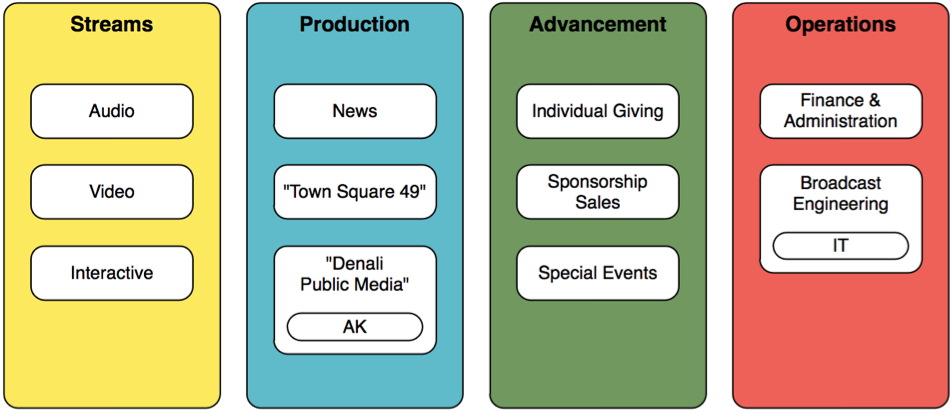
We’re organizing the company in a completely new way, using four divisions:

  • Community Media Streams
  • Media Production
  • Advancement
  • Operations

Previously we were arranged into platform and functional units with a total of 8 people at the “management” table, including the CEO. Now our “managers” number only 4. The old breakdown:

  • KSKA-FM
  • KAKM-TV
  • APRN
  • Broadcast Engineering
  • Information Technology
  • Development
  • Finance & Administration

Much of this organizational structure stemmed from the two mergers that created APTI as it stands today.  TV and radio uneasily merged in the early 1990’s.  APRN was merged into the company (by necessity, I would contend) in 2004.  Since each merger, the units have largely acted alone — and have competed for resources.

The primary collapse is to bring together radio and television and the web — to date just a subset of my duties — under a single manager (me).  Other public media companies have called this a “Chief Content Officer” or some nomenclature like that. We decided to split what others might call “content” into streams and production because we felt the two were fundamentally different things. Media Production makes programs.  Streams creates experiences.

I’m falling asleep as I write this, so I’m going to stop here.  There’s much more to say, probably this weekend and, really, for months to come. In the mean time, here’s the formal press release (PDF) crafted by our own CEO on Thursday afternoon. It’s intentionally brief and vague.  We have longer docs we’ve been developing internally.

More later. And thanks to all the Twitter pals out there that patiently waited to hear more!

DTV Conversion: 199 and counting

We’re now just 199 days from the end of (the vast majority of) analog TV broadcasts in the United States.

That would be February 17, 2009 for those keeping score.

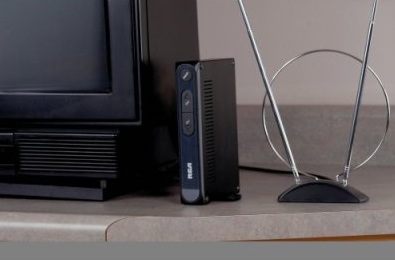
I’m ready — I’m sitting on cable and I have a DTV antenna outside — it’s just not hooked to the TV yet. How about you?

On the death of BPP

Well, the Bryant Park Project has less than a month left. Literally.

Was it too beautiful to live, perhaps? Hardly. I mean, can anyone really feign shock that well?

Let’s recount the strikes against this endeavor:

  • The economic downturn is hitting NPR like everyone else; news budgets are frozen and that’s just the beginning. Like any business looking to cut costs, whoever was hired last will be fired first, whether that’s a show or a person. That’s just the way it goes.
  • One of the original hosts (Burbank) — and let’s be honest, the host with real NPR cred — walked away just as the show was getting started. Talk about throwing off the rhythm.
  • The second host (Stewart) took off for maternity leave six months into the show. That can’t help.
  • Then the news anchor (Martin) left for a cush job at ABC News. (What is it with NPR people leaving a real news operation to go work for a fake news operation? Is it just the money?)
  • Plus the fill-in host (Pesca) has been splitting his time between BPP and NPR HQ the whole time.

I’m sure Matt Martinez was busting his ass every day trying to keep things rolling forward, but with a set of facts like these, what can you really do?

Add it up and can you imagine a show — any show in any format — making it to its first birthday without a hell of a lot of buy-in (political and cash) from the top?

But wait — there’s more!

  • This was fundamentally a Gen X show inside a Boomer network. What Boomer on the Board of NPR is going to protect a show they don’t air on their station, they don’t listen to and/or they don’t like?
  • This show never made it to the bulk of the listeners out there. The only people that knew about it were NPR junkies that took the time to browse the NPR web site, trolling for goodies. More might have liked it but never knew it existed.
  • In a risky economic environment, what local station program director is going to broadcast BPP instead of Morning Edition? Show of hands, please… yeah, that’s what I thought.
  • Assuming you’re a station with an HD Radio transmitter and you could program BPP onto a secondary channel, great! But who will hear it? Right: no one, because no one has an HD Radio. (BPP could be an Internet success because iPods and computers far outnumber HD Radios.)
  • Though BPP was successful on the web (something like 1,000,000 monthly uniques), we must remember that NPR is not a media company, it is a radio company. Arbitron numbers will always be bigger than Google Analytics numbers to a radio company. NPR may be trying to change to meet the challenges/opportunites of the web (and are making huge strides for a company that size), but it’s still a radio entity, so building a show specifically for the web is not a strategic option for them. At least not today.
  • Compared to an out-of-the-garage web startup, the cost of producing BPP was astronomical. Sure, web startups in Silicon Valley can devour $2 million at a power lunch, but for NPR and public radio that’s a huge sum, especially given all the other factors noted above. Web startups don’t need that much money, but to do BPP “the NPR way” requires big salaries and budgets. It was a radio economic solution applied to what was essentially a web economic problem — that makes it unsustainable on its face.

All in all, it’s a sad day for NPR. Not so much because it lost a program that was, in truth, faltering from the start, but because the Board appears to have missed a key opportunity here.

NPR could have taken a revised BPP straight to the web and made it the flagship show of a new web-scale innovation unit. BPP could have led NPR into a future not bound by the FCC, Arbitron, legacy stations, transmitters and more. For about $1 million a year they could have jump-started the next stage of their evolution.

I’m beginning to think Gen X and Gen Y need to band together and start their own national public media service — without the parochial split between radio and TV and web. Because PBS kills quality Gen X projects, too. Oh, and Fair Game was axed by PRI recently.

By the way, read the comments on the brief BPP blog post about the cancellation. There’s an audience there, to be sure. And it’s one that could easily sustain a web-based (and web-scaled) program and service. If I had $1 million to invest, I’d definitely put it into this audience.

Changing tires on the public media bus at 60mph

Pop quiz, hotshot. There’s a bomb on a bus. Once the bus goes 50 miles an hour, the bomb is armed. If it drops below 50, it blows up. What do you do? What do you do?

One of my favorite writers on matters of strategy, especially related to technology application in business, is Bob Lewis, a long-time columnist from InfoWorld and a popular business consultant as well. He writes a weekly column, shared via the web. Great stuff.

This week he wrote a piece (the second in a series) on business strategy: “A business change cornucopicolumn.” And it sounds like he’s talking about my specific public media company in Anchorage and the public media industry in general.

It’s spooky.

Check out this rather heavy quotation (sorry, I just had to) and see if it fits your strategic situation (added boldface is mine):

[Let’s] start with a framework for describing any business. It has ten dimensions — five external, five internal.

The external dimensions are:

  • Customers: The people who make buying decisions about what the company has to sell.
  • Product: What the company sells its customers.
  • Price: What the company charges for its products, along with margin goals, contract terms and conditions and so on.
  • Marketplace: The business ecosystem — suppliers, distribution channel, competitors and partners.
  • Messages: How the business explains itself and its products.

The internal dimensions are:

  • People: Employees and contractors — the human [beings] themselves, their skills, knowledge and experience.
  • Process: How people do the company’s work.
  • Technology: The tools people use when fulfilling their roles in the company’s processes.
  • Structure: How the company is organized — its reporting structure, [salary] structure, policies and guidelines, and internal communications.
  • Culture: How employees respond to common situations.

In healthy organizations, the ten dimensions are consistent, interconnected, and mutually reinforcing.

Companies don’t undertake strategic change just because one or two are a bit moldy. They undertake it … because the company’s business model no longer works. Perhaps the company’s products are no longer relevant, or the customer segment it serves is shrinking, or its pricing is no longer competitive in its marketplace, or its marketplace has changed in some serious way. It’s fallen behind.

Many companies enter a sort of vegetative state in which doing nothing at all becomes the strategy — they pare spending down beyond the minimum, hoping someone buys them before they’re completely [beat]. The alternative, though, is nearly as bad, because there is no such thing as changing just one of the ten dimensions of organizational design.

[For example:] Your competitive challenge is pricing. But you can’t change just the price. You need a [better] response than that, because … you’ll lose money on every transaction.

To cut prices while preserving margins you’ll need to change your processes. That means “changing” your people in some way too, because new processes wholly or partially invalidate old skills.

Most likely, you’ll have to change structure and culture as well, and reposition yourself in the marketplace (including, perhaps, bypassing your current distribution channel). All of which will require significant changes in technology.

That’s a lot to change all at once. You have to take an interconnected ten-dimensional model of the business that worked and redesign it into a new interconnected ten-dimensional model of the business that works.

Then you bet the farm, implementing the new organizational design as one massive process. And you don’t get to stop running your business during the change-over.

…[The] company’s executive team decides the basic shape of pricing goals, production strategy (process), and distribution. It also decides on any structural changes that will be required, putting the right people in charge of critical business responsibilities.

And, it will define the underlying cultural changes necessary for everything else to work.

The executive team will focus its attention on the cultural change. The rest of the company will use the 3-1-3-4 formula (3-year vision / 1-year strategy / 3-month goals / 1-week plan) to figure out everything else and make it happen in manageable increments.

Holy shmoly!

I don’t know about your company, but that fits my company, right this second, perfectly.

We’re grappling with these problems all at once:

  • Public TV’s audience is dwindling nationally and locally. That reduces advertising (sponsorship!) revenue potential and revenue actuals.
  • TV membership dollars are steady, but from a shrinking number of donors (per donor giving is up, total donor count is falling).
  • The cost of producing national-quality mass-media-style pubTV programming has risen beyond our ability to do it locally and it’s quickly becoming too expensive to buy it in national packs from PBS.
  • The cost of producing lower-end media has collapsed, allowing a flood of programming at the bottom-end of the market, and allowing the “audience” to produce (and consume) their own digital media, without paid gatekeepers like us.
  • Our TV fundraising model is based upon transactions with people that don’t usually like us or give us money — we sell them stuff. In so doing, we’ve painted ourselves into a corner: true believers hate us when we grab the money and cut off their favorite programs, yet we need that cash to pay for the true believer programs. When we attempt to raise money around regular programs, they tank, financially.
  • Our public radio audience has grown over the past 15 years, but has now flattened and may be starting a long backward slide if we can’t figure out how to grow our audience further or deepen our relationship with the audience we’ve got.
  • Our staff is composed almost exclusively of baby boomers and others that built and/or grew up with the public media system. They are approaching retirement and don’t seem to have another “revolution” in them. Internet models are curious, but unproven, for them, and since they largely eschew new media consumption models, they don’t know how to approach them from a business angle.
  • Government funding for public media in our state has fallen over the past 15 years. Using inflation-adjusted dollars, funding has dropped by more than 50% in 10 years. Plus, companies successful with fundraising activities are deliberately cut off from state funding. And federal funding has been flat or declining (in inflation-adjusted dollars).
  • Our strategic drift has led to an accumulation of drifting employees and a loss of innovating ones. If you’re a striver, a pusher, a mover-and-shaker, if you want to accomplish something, we offer a frustrating environment at best. Our culture says we should wait for a knight in shining armor to come along with bags of money a new and exciting crusade to save us.
  • Our product set, as currently deployed, does not compete well enough in a mass market well enough to draw the required revenue, and it doesn’t serve a niche market well enough to garner a rabid following of local support. In web terms, we’re too small to be Google, but too big to be 37signals. (What’s the opposite of a sweet spot?)

I could go on.

Our CEO has repeatedly likened our strategic situation to changing the tires on a bus while driving down the highway at 60 miles per hour. That feels about right.

Personally, I’d like to pull over, get this bus up on a lift and change the tires in a more controlled environment. Then we can get back on the road. But as soon as we drop below 50mph — KABOOM! …the bus explodes, and that’s it for Keanu Reeves and Sandra Bullock.

Which is why Bob Lewis’ 3-1-3-4 formula may be required for us on the mobile pit crew. And it’s why strategies built around a new understanding of the 10 dimensions of business are in order. Clearly, more than 1 or 2 of the 10 dimension have changed:

  • Our customers are moving online and expect on-demand access in addition to the streamed services. They also want to interact with us. (Ironically, in a hyper-connected world, they’re more “disconnected” than ever — they need more connection with people like us, people like themselves, people in their neighborhoods.)
  • Our marketplace has changed; it’s no longer “3 networks + PBS” and hasn’t been for years. And it’s getting worse as new platforms appear and the audience fractures.
  • Pricing models have evolved dramatically as the scarcity economic model dissipates in media markets.
  • Our people and processes were selected for legacy customers and markets, not the present day; they need to be retrained technologically and culturally or be replaced.
  • Our legacy technology is prohibitively expensive to maintain, doesn’t offer sufficient economic advantage and prevents investment in new technology that would enable new processes and services.
  • Our business structures and company cultures are unfocused at best and self-destructive at worst. We focus on “radio” and “TV” and “web” and we promote history over innovation. We need a culture that encourages and develops the best of what our public media “tribe” seeks to experience.

Can we still turn it around? I don’t know. Perhaps in smaller companies with a few lucky lightning strikes of vision and a philanthropic community that supports a positive vision of the future (a vision we must articulate). Or maybe in the largest companies with deeper pockets and tighter links to market forces.

We’re at the cusp of turning it around in Anchorage. Or at least I think so — I hope so. There’s still a great deal of fearless, tireless and perhaps even foolhardy leadership required. We might just have the kernel of what it takes. I think the rest of 2008 will likely set us up for ultimate success or failure. We’ll either get this right quickly or it will likely be too late to recover.

How are you doing with your public media bus?
Near-future of TV, via Mossberg

Great little summary of the present and near-term tech developments related to TV and video distribution technologies by Wall Street Journal tech columnist Walt Mossberg.

Found via Gerd Leonhard

http://blip.tv/scripts/flash/showplayer.swf?tabType3=none&tabUrl3=undefined&tabTitle3=undefined&tabType2=none&tabUrl2=undefined&tabTitle2=undefined&tabType1=none&tabUrl1=undefined&tabTitle1=undefined&enablejs=true&feedurl=http%3A%2F%2Fbeettv%2Eblip%2Etv%2Frss%2Fflash&file=http%3A%2F%2Fblip%2Etv%2Frss%2Fflash%2F801182&thumb=http%3A%2F%2Fpanther2%2Evideo%2Eblip%2Etv%2FPlesstv%2DFTCShouldStopVerizonFromCallingDSLBroadbandWaltMossberg532%2Epng&brandlink=http%3A%2F%2Fwww%2Ebeet%2Etv%2F&brandname=Beet%2ETV&showguidebutton=false&showplayerpath=http%3A%2F%2Fblip%2Etv%2Fscripts%2Fflash%2Fshowplayer%2Eswf

Broadcast Law Blog

I’m assuming that everyone in the public media universe (especially those with FCC licenses of one kind or another) already knows about the Broadcast Law Blog published by law firm Davis Wright Tremaine, LLP.

If it’s not already in your RSS reader or list of sites to review regularly, be sure to get it in there.  The FCC, under the direction of telco-loving politico Kevin Martin, has been very busy in the last year proposing new rules on all kinds of stuff related to broadcasters.  And it’s not little niggling things — this is big stuff that will impact operating costs, reporting activities and more.

Naturally, you should consult with your own attorney before embarking on any changes or new plans, but this is sound coverage of FCC changes and how they relate to broadcasters.

Talk about required reading…

Why traditional TV production is dead

TV stations and professional staffs — commercial and noncommercial alike — have been around for more than a generation. Television started in the middle of the last century and since then thousands of people across the country have built careers upon the technologies, processes and the advertising dollars that flowed freely for decades. A complex art and science, TV demanded workers develop expertise with an arcane and complex set of tools for their unique work. Creating a high-quality TV show was impossible without armies of specialists to turn all the required knobs and punch all the required buttons at synchronized moments.

Money from national and local advertisers flowed easily to television stations — the mass medium of choice that gave advertisers access to an impossibly huge audience; an audience bigger than the daily newspapers; an audience bigger than any single radio station. Advertising money built the industry, dollar by dollar, viewer by viewer. It’s been a great ride.

But those days are coming to an end. Actually, they’ve already ended. Advertisers and TV execs have simply been slow to realize it and are only now starting to act. (Think of it as the music industry, circa 1995.)

Why? What’s happened in the TV market to make stations swing from cash-rich to cash-poor in just the last 10 years? What’s bankrupting the system? And is this a permanent trend or just a temporary blip? Here’s the answer in less than 5 minutes:

The economic model of traditional TV has imploded as the viewing options have exploded (not to mention all the competing technologies that have emerged in the last 10 years, exacerbating the problem). And as the money for TV broadcasting goes away, the ability to produce programming similarly dries up.

For small and midsize public television stations (not the rich behemoths like WGBH) that want to produce original programs of public value, the path ahead is actually pretty clear and comprises two primary modes:

  1. Big TV. Large-scale high-end TV productions will be few and far between. They will be funded as independent projects, will mostly involve outside contractors rather than inside employees, and will draw most of their funding from external one-off granting sources. Public media companies might manage or “host” these projects, but we won’t fund them from operating cash. When 1 or 2 hours of “PBS quality” video costs $250,000+ to produce, it’s clear the economics are beyond the meager budgets of smaller stations.
  2. Small video. Ongoing local productions must scale back to one person + camera + laptop, in variations of the VJ (video journalist) model, as espoused by Michael Rosenblum and others. These small productions must be aimed at multiplatform niche distribution rather than mass entertainment. Plus — an important second fact — we won’t produce all this content by ourselves. We’ll curate and collaborate in ways that will make the traditionalists scoff and sputter. In the end, “TV” folks will either become multifunctional “video” folks or will have to leave for production jobs at specialty video houses.

And that’s just the short-term transformational model (up to 5 years), focused on video content production. It’s quite possible that owning an actual television station (the licenses, the towers, the impossibly heavy technical infrastructure) will become economically unsustainable rather quickly as new technologies chip away at TV’s traditional dominance. Indeed, owning a local over-the-air TV station is likely to be financially dangerous to all but the most efficient regional or national network owner-operators by 2015.

If we in public media believe it’s our mission to serve the public interest using digital media, then video must be part of the equation. But does “TV” have to be in the mix? In the short term, definitely. In the long term, maybe, but probably with significant strategic changes.

For now, we may not know the fate of local TV stations, but traditional TV production models are already dead. The revolution is underway. Click below for another 90-second forehead slap:

So these are the market realities. It’s up to us to decide whether these are exciting or threatening developments. Should we engage and evolve or should we hunker down and hope for a different future?

I know my answer. What’s yours?

It's high time for real-time community engagement

Geeks out there probably know Leo Laporte, the long-time commercial radio and TV host, made especially well-known via the now-defunct TechTV cable channel. He continues to develop media, having built the TWiT podcast “network” over the past couple of years, including the flagship This Week in Tech podcast, drawing some 200,000 listeners a week.

In a blog post this weekend, Laporte describes several changes he’s bringing to the core show, centered on live video streaming. I’m recommending the post because he describes both some Media 1.0 troubles he’s had lately and then describes the changes he’s about to make in his Media 2.0 company.

Why should public media folks care?

Because Laporte is doing what many of us in public media are not, and his strategy is especially well-suited to the Media 2.0 economy:

  • he’s engaging with his community in a two-way and multi-way fashion that’s meaningful, open and authentic
  • he’s increasing his real-time contact hours across multiple digital platforms (he doesn’t limit himself to one platform)
  • he’s doing it all himself, on the cheap — there’s no network or corporation pushing him forward or holding him back

Laporte’s example is inspiring. Imagine what a public service media company with a true local engagement mission could do, using similar methods and the same low-cost, low-risk, rapidly-developing technologies. Engaging your community, communicating with your “true fans” is not a matter of holding public meetings or taking pledge calls. I’m hoping to steal some of this TWiT model for use in my shop (assuming we can get past our difficult strategic planning process).

But we’d better move fast.

Because in a world where Content is a commodity with a value approaching zero (or as Robert Paterson described content recently: noise), all we have left is Contact and Context. PBS and NPR can provide content on a national scale and with unrivaled quality. They can even distribute it and gather financial support for it directly. So we, the locals, must do what they cannot: provide authentic contact and develop a contextual service in tune with our local communities.

Take a look again at Laporte’s example. He’s building out in service of his “tribe,” his community. He’s co-creating value with volunteers in his “TWiT army.” He’s using two-way platforms authentically. He’s got real-time contact with his audience. He’s doing it without transmitters or other oppressively heavy engineering costs. We should be so lucky.

We can be so lucky.

Tending the Public Media Tribe

If you’re not reading Seth Godin, you’re not paying attention to the future of successful public media. Godin doesn’t address public media directly, but he does address issues of marketing and community and the economics of making money through the products or services a company provides in a new media world.

Godin talks a lot about tending to your “tribe” — that group of people that love your product/service and who share your values or perspectives and interests. If you’ve been in public radio or TV for any length of time, you know these folks. Most likely you’re already a member of this tribe yourself.

Recently Godin gave a talk at a music conference and his comments, while aimed at a music marketing audience, are applicable to all of us in public media — news, music, radio, TV, whatever — because the trends affecting the music business (disastrously) today are the same ones rewriting the rules for all media. And the rules for success in the next generation will be the same: serve your tribe; be indispensible; be the best.

Here are some highlights from Godin’s talk, pointed out by Gerd Leonhard and partially chosen by digitalwaveriding (the boldface highlights are mine):

if I asked you for the name and address of your 50,000 best customers, could you give it to me? Do you have any clue? [No?] Then what happens every day is you go to a singles bar and you walk up to the first person you meet and propose marriage and if that person won’t marry you, you walk down the bar to every single person until someone says “I do.” That’s a stupid way to get married. A better way to get married is to go on a date. If it goes well, go on another date. Wait to tell them on the third before you tell them you’re out on parole. Then you meet their parents, they me your parents, you get engage, you get married. Permission is the act of delivery. Anticipated, personal and relevant messages to people who want to get them.

… The next thing is what I call the Seinfeld curve. The Seinfeld curve shows us Jerry’s life. If you like Jerry Seinfeld you can watch him on television, for free, in any city in the world two or three times a day. Or, you could pay $200 to go see him in Vegas. But there is no $4 option for Jerry Seinfeld. This is death. You can’t make any money in here. Because if you’re not scarce I’m not going to pay for it because I can get it for free. And one of the realities that the music industry is going to have to accept is this curve now exists for you. That for everybody under eighteen years old, it’s either free or it’s something I really want and I’m willing to pay for it. There is nothing in the center — it’s going away really fast.

… The next thing is this idea that people care very much about who is sitting next to them at the concert. They care very much about the secret handshake. They care very much about the tribal identification. “Oh you like them? I like them!”

… It’s really important to people to feel like they are part of that tribe, to feel that adrenaline. We are willing to pay money, we’re willing to go through huge hoops, trampled to death in Cincinnati if necessary, in order to be in the environment where we feel that’s going on.

… I want to argue that the next model is tribal management. That the next model is to say, what you do for a living is manage a tribe, many tribes, silos of tribes. That your job is to make the people in that tribe delighted to know each other and trust you to go find music for them.

… There is a lot of music I like. There is not so much music I love. They didn’t call the show, “I Like Lucy,” they called it “I Love Lucy.” And the reason is you only talk about stuff you love, you only spread stuff you love. You find a band you really love, you’re forcing the CD on other people, “You gotta hear this!” We gotta stop making music people like. There is an infinite amount of music people like. No one will ever go out of the way to hear, to pay for, music they like.

Fortunately or unfortunately, the future for public media companies will involve considerable “tribe management” and will involve a smaller audience than we have today, either locally or collectively — all media will have far more fragmented communities than in the past. Now is the time to identify who’s in and who’s out of your tribe and figure out how best to serve the community that gathers around public media content and values.

This may sound elitist or even fatalistic to the traditional mass media thinkers out there: “But I want the biggest audience possible!” Well, you can’t have it. Large audiences of mildly engaged viewers or listeners or readers are the old model. The new model requires deep and authentic engagement with that “tribe” of people. You can still invite everyone into the tribe, and you should. But in a world of infinite tribes, folks will naturally gravitate to the tribes that best serve their needs and interests (and they will have multiple tribes, of course).

Personally, I think this is an incredibly exciting time for public media folks that embrace this new approach. There’s new opportunity not only for sustainable businesses, but for truly meaningful, impactful and interactive work. The only problem is developing the courage to let mass media thinking fade over time, even though it’s been tremendously successful for the last 40 years.

Is this your public TV station?

One of the things that’s interested me since I entered public media in the fall of 2004 was the relationship between public media today and public media as originally intended under the 1967 Public Broadcasting Act. I’ve wondered, are we still the institution we were meant to be? If not, is that good or bad?

Sparking more of this thinking today was a video linked by Gerd Leonhard. It was produced by Denver OpenMedia and explains the TV and mass media landscape of today and looks at how distribution, content and democracy are linked via mass media. It also focuses on Public Access television, a distinctly different style of television from public broadcasting, but one that shares at least some DNA with pubcasting’s origins.

It’s a great 30 minute introduction to understanding media — public or commercial. Highly recommended, mostly because it puts the economic model of historic TV into clear relief.

NOTE: The video is after the “read more” link because it auto-starts and I didn’t want to place it on my home page directly.

Continue reading “Is this your public TV station?”