 I just ran across this great short post on informatics and had to share it. I wish Dr. Gibson had written this post a couple years ago when I first used the word “informatics” with my new health center colleagues. When I said the word, I might as well have been speaking Klingon — no one knew what it was — not the clinicians, the business folks, operations… no one had heard the term. Of course it didn’t help that I recommended we consider hiring an informaticist — a new position that no one knew they needed and couldn’t define. 😉
At the time, and to some degree even today, there was an expectation that mainline IT staff would fill the role of informaticist for the company. And in some small ways, we do. But not in the big ways, not in transformative ways. Our IT staff are saddled with basic systems maintenance, user support, new system installation and integration efforts, and so on. We’re not clinicians by training. While we listen and learn a little every day about our clinical operations, we’re still not doctors or nurses. (Funny how that works.)
So what is informatics? What does an informaticist do? Dr. Gibson explains it like this (boldface mine):
Important informatics skills include change management (not just IT change management, but culture and process change management as well), business analysis, stakeholder engagement, project management, requirements development, strategic thinking to place projects into a larger vision, building for inter-operability, translating between IT & business, system life cycle, communications, [etc.]). A good informatician can speak the language of both IT staff and program staff, and should be a good communicator and group facilitator.
Informatics skills are not necessarily present in IT departments. A programmer may be very skilled in writing a program to do what he wants, but is rarely skilled in getting the thorough understanding of what users need. The database administrator may be very skilled in structuring a database to run very quickly, but usually does not understand the content well enough to create operational definitions that address what program managers want to know.
My recommendation from a couple years ago was that we needed to hire an informaticist, or at least someone who had clinical background and technical chops. With all the reporting and analysis requirements in UDS, Meaningful Use (MU), and Patient Centered Medical Home (PCMH), not to mention workflow changes needed to meet increasing security and privacy requirements (HIPAA, HITECH) and general efficiency needs, having someone who could drive workflow / care / data change projects and communications would help a lot.
In the end we didn’t hire a classic informaticist, but we do have a high-level manager driving Quality Improvement (QI) efforts, PCMH, and MU, and she’s quite technically capable as well as a licensed provider. So we’re covering the need for now.
It’s possible that at our scale (currently around 130 employees), perhaps a full-blown highly-paid informaticist won’t be necessary in the future. It’s possible the EHR vendors and various governmental agencies will settle on a collection of core measurements and workflows that work for everyone and those features will just be built-in to our systems. (Ha! Sometimes I crack myself up…)
But for now, I would argue everyone in the health center space (50-500 employees) needs to be thinking about hiring an informaticist. Someone that has clinical training. Someone that isn’t afraid of computers and likes data and analysis. Someone that can communicate well and can drive change projects. So yeah… a miracle worker!
Meanwhile, everyone on your management team needs to know what informatics is. Your health center needs to get comfortable with data and change. Because “accountable care” demands proof, and the proof is in the data.
BONUS: Informatics Links
- Translator for Nurses Who Don’t Speak Geek: Nurse Informaticists
- Wikipedia: Health Informatics (it’s actually a great reference)
- Healthcare Informatics magazine
- Health Informatics Forum — a social media site for informatics professionals
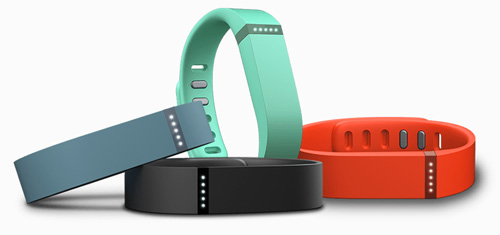
 Where the Fitbit One Beats the FuelBand
 Where FuelBand Beats the Fitbit One
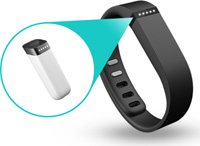 And Now the Fitbit Flex: Where Does it Win?
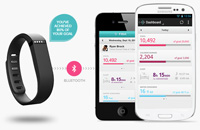 Potential Fitbit Flex Problems
 “On a recent day [the patient records] sat next to a red recliner where Ziggy, the family’s black-and-white cat, curled up for a nap.”
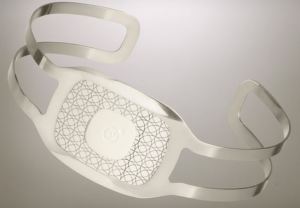 The
The 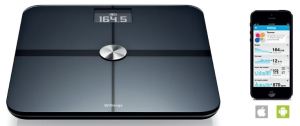 The Smart Body Analyzer is the most interesting addition to the field, as it’s bringing more sensors to the party. This thing will get your weight and body fat percentages, like the current model, but it will also capture heart rate and — this is the amazing bit — air quality, in terms of CO2 levels in the ambient air. Captured data syncs via Wi-Fi or Bluetooth, and naturally goes into their cloud-hosted data monitoring system and smartphone apps. You can sync over to
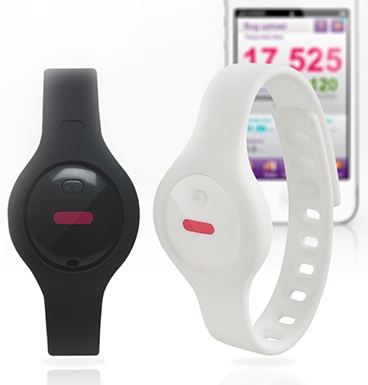 Meanwhile, Fitbug is introducing a bunch of new gear, including the
 When you’re done with the pretty report, here’s some conceptual thinking for you: Compliance strategies can be the enemy of security strategies. Why?
  Healthcare Informatics has a nice
  Meanwhile, I gotta give a virtual high five to Dr. Lyle Berkowitz. He’s effectively addressed the “crisis” of too-few primary care providers with an
 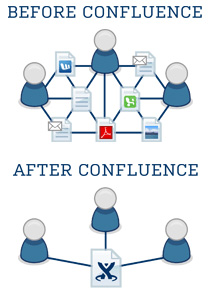 Email is like Democracy: it’s the worst… except for every other system out there. But that may be changing, as companies discover and deploy new collaboration platforms. SharePoint got things started, but other platforms — especially simpler and more social platforms — are gaining traction, like
  Clinicians and pharmacists in your health center might appreciate this
  Now think back to 2009 and the federal cash that burst onto the scene to help pay for increased digitization of health. Mmmmm… cash! Now imagine where we’d be today without that money and the pushes of the HITECH program and ARRA.
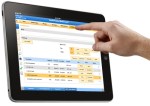
  Everyone’s getting the telehealth bug, so be prepared to support it in your health center. Even the feds are willing to start spending on remote doctor visits, or at least
 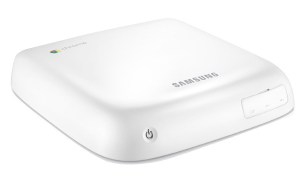 In the run-up to building our new health center in Anchorage, we had plans to buy and deploy kiosk-style computers in the facility. These would be made available for patients to access a patient portal or our web site. But three things got in the way:
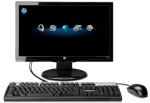 Meanwhile, there’s yet another alternative if you want an Internet PC for the public without the hassle of rolling your own Windows or Ubuntu box. HP now makes the sexily-named
  The latest HIPAA breach story out of northern Idaho breaks my heart. It also chills me to the bone. First off, here’s the news:
 Here are my favorite news and commentary links from the Health IT, community health center (CHC), nonprofit, and general IT sectors today.
 Gravity Medium